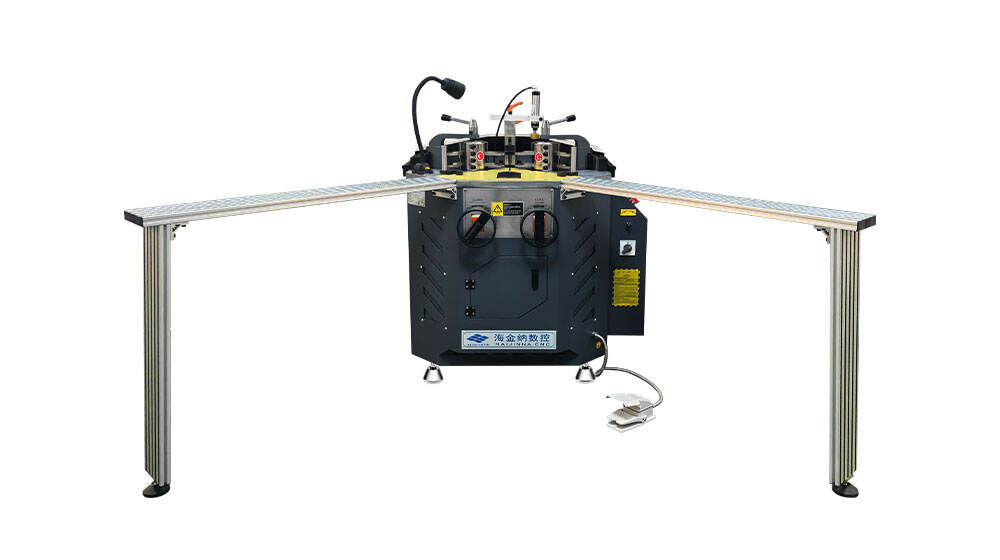
Large Gantry Milling Machines: Precision Heavy-Duty Machining Solutions for Oversized Components

Get a Free Quote

Our representative will contact you soon.
Name
Email
Telephone
Country
Company Name
Message
0/1000

large gantry milling machines

Large gantry milling machines represent a cornerstone of modern precision manufacturing, designed to handle substantial workpieces with exceptional accuracy and efficiency. These impressive machine tools feature a bridge-like structure where the gantry spans across the workpiece, with the cutting spindle mounted on a movable crossbeam. The fundamental configuration allows the machine to process components that are both lengthy and heavy, making large gantry milling machines indispensable in industries requiring large-scale metalworking capabilities. The main functions of large gantry milling machines encompass a comprehensive range of operations including face milling, contour milling, drilling, boring, and tapping across extensive work surfaces. These machines excel at removing material from oversized components with remarkable precision, creating flat surfaces, complex three-dimensional profiles, and intricate geometrical features. The technological features that define modern large gantry milling machines include advanced CNC control systems that enable multi-axis simultaneous movement, typically offering three to five axes of motion for enhanced versatility. High-powered spindle motors deliver the torque necessary to machine hardened materials, while precision linear guideways ensure smooth, accurate positioning throughout the entire working envelope. Thermal compensation systems actively counteract heat-induced dimensional changes, maintaining tight tolerances even during extended machining sessions. The applications of large gantry milling machines span numerous industrial sectors, with particular prominence in aerospace manufacturing where they machine aircraft structural components, engine housings, and landing gear assemblies. The energy sector relies on these machines to fabricate turbine housings, generator frames, and wind tower components. Shipbuilding operations utilize large gantry milling machines for propeller shafts, engine beds, and hull sections. The automotive industry employs them for manufacturing press dies, large molds, and structural automotive components. Large gantry milling machines also serve critical roles in heavy equipment manufacturing, rail transportation component production, and general metalworking operations requiring substantial material removal from oversized workpieces. The robust construction combined with sophisticated controls makes large gantry milling machines essential production equipment for manufacturers tackling large-scale precision machining challenges.

New Products

Large gantry milling machines deliver remarkable benefits that directly translate into improved productivity and profitability for manufacturing operations. The exceptional work capacity stands as a primary advantage, allowing shops to machine components that would otherwise require multiple setups or prove impossible to handle on conventional equipment. This capability means manufacturers can accept larger contracts and expand their service offerings without outsourcing oversized work to competitors. The rigid structural design provides outstanding stability during heavy cutting operations, which translates to better surface finishes and tighter dimensional accuracy on finished parts. When your production schedule demands consistent quality across multiple identical components, large gantry milling machines maintain repeatability that reduces scrap rates and minimizes costly rework. Time savings represent another significant practical benefit, as the expansive work envelope accommodates multiple smaller workpieces simultaneously, enabling batch processing that maximizes spindle utilization. Instead of loading and unloading individual parts repeatedly, operators can fixture several components at once, dramatically reducing non-productive time and increasing overall equipment effectiveness. The versatility of large gantry milling machines proves invaluable for job shops and contract manufacturers handling diverse project requirements. These machines tackle various materials including steel, aluminum, titanium, and composite materials with equal proficiency. The multi-axis capabilities enable complex geometries to be completed in single setups, eliminating the positioning errors that accumulate when transferring workpieces between different machines. Operational efficiency improves as automated tool changers swap cutting tools quickly without operator intervention, while advanced programming features simplify the creation of intricate toolpaths. Large gantry milling machines equipped with modern controls offer user-friendly interfaces that shorten the learning curve for operators and programmers alike. The machines reduce labor costs per component by automating operations that would otherwise require significant manual intervention. Energy efficiency has improved substantially in recent generations of large gantry milling machines, with optimized drive systems consuming power proportional to actual cutting loads rather than running at constant maximum capacity. Maintenance accessibility represents a practical advantage often overlooked, as the open gantry configuration provides technicians clear access to critical components for routine servicing and adjustments. Predictive maintenance features monitor component condition and alert operators to potential issues before breakdowns occur, maximizing uptime and preventing unexpected production interruptions. The long service life of properly maintained large gantry milling machines ensures that capital investments deliver returns across decades rather than just a few years. These machines retain their accuracy and performance characteristics even after millions of machining cycles, making them sound financial investments for growing manufacturing businesses. The ability to upgrade controls and automation systems as technology advances means large gantry milling machines remain competitive production assets throughout their operational lifetime.

Tips And Tricks

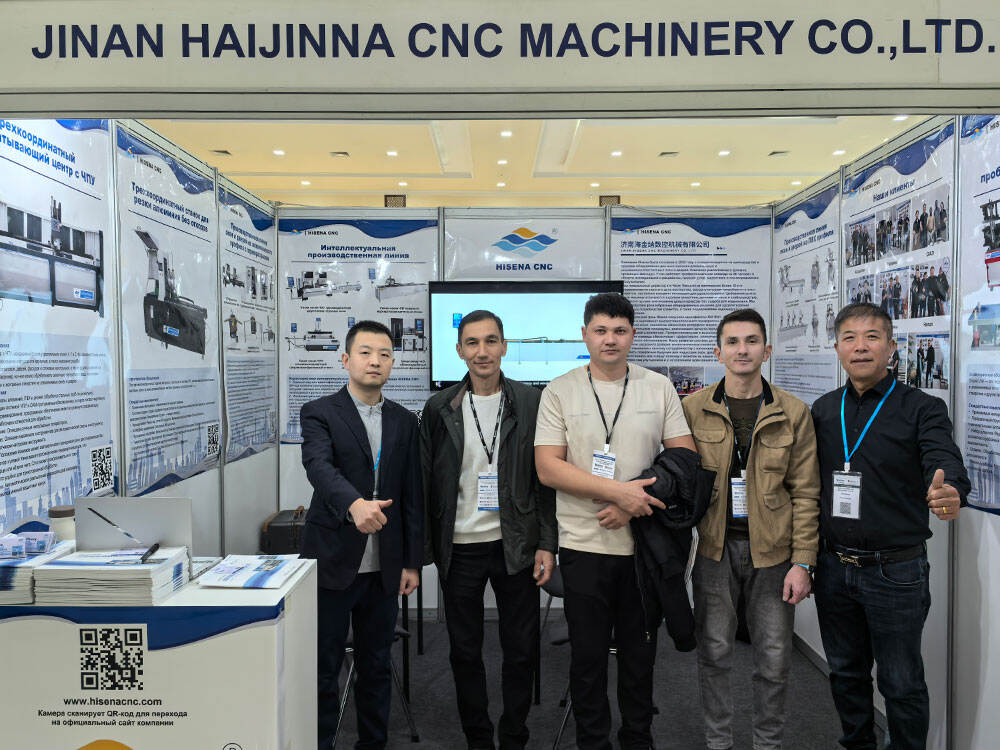
Hisena participated in the International Glass, Door, Window, and Aluminum Exhibition in Uzbekistan

30

Apr

Hisena participated in the International Glass, Door, Window, and Aluminum Exhibition in Uzbekistan

View More
Hisena Showcases Self-Developed

30

Apr

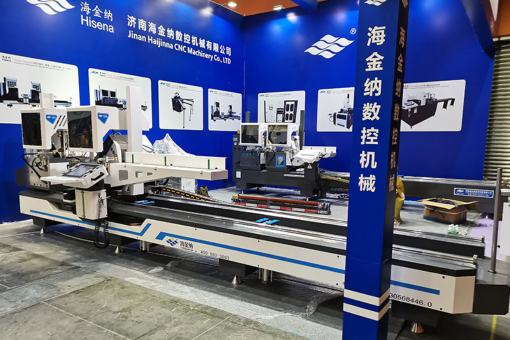
Hisena Showcases Self-Developed "Upgraded CNC Curved High Precision Saw" at Shandong International Window and Door Curtain Wall Expo

View More
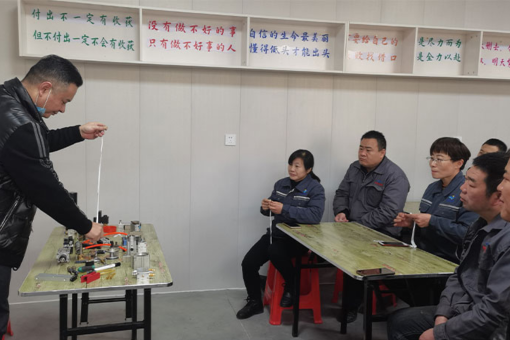
Hisena Staff Trains on Pneumatic Components to Better Serve Customers

30

Apr

Hisena Staff Trains on Pneumatic Components to Better Serve Customers

View More
Hisena Debuts

30

Apr

Hisena Debuts "CNC High Precision Saw with Upgraded Wireless Transmission" at Guangdong Exhibition

View More

Get a Free Quote

Our representative will contact you soon.
Name
Email
Telephone
Country
Company Name
Message
0/1000

large gantry milling machines

Superior Dimensional Capacity for Oversized Component Manufacturing

Superior Dimensional Capacity for Oversized Component Manufacturing

Large gantry milling machines distinguish themselves through extraordinary dimensional capacity that fundamentally expands what manufacturers can produce in-house. The working envelope of these machines typically ranges from several meters to over twenty meters in length, with corresponding width and height proportions that accommodate truly massive workpieces. This expansive capacity addresses a critical manufacturing challenge that smaller machines simply cannot overcome: the physical impossibility of machining components that exceed available machine dimensions. When manufacturers invest in large gantry milling machines, they gain the strategic advantage of controlling their entire production process rather than depending on external suppliers for oversized component machining. The structural configuration features a bridge-like gantry that spans the full width of the machine base, with vertical columns supporting the crossbeam at each end. This architecture provides exceptional rigidity across the entire working area, ensuring that cutting forces do not cause deflections that would compromise dimensional accuracy. The machine bed, constructed from high-grade cast iron or welded steel fabrications, offers a thermally stable foundation that resists warping and maintains flatness specifications measured in micrometers per meter. Heavy-duty linear guideways or box ways guide movement along each axis, with preloaded designs that eliminate play and backlash. The practical implications of this dimensional capacity extend beyond merely accommodating large parts. Manufacturers discover they can fixture multiple medium-sized components on the table simultaneously, essentially converting the large gantry milling machine into a highly productive batch processing center. This operational flexibility proves particularly valuable in job shop environments where order quantities vary and rapid changeovers between different part numbers are routine. The generous working dimensions also provide space for sophisticated fixturing systems, including tombstone fixtures, modular clamping arrangements, and custom-designed workholding solutions that optimize part presentation to cutting tools. Operators appreciate the accessibility that large gantry milling machines provide, as the open sides allow comfortable approach for loading, inspection, and measurement activities. Safety improves as well, since adequate clearance around workpieces reduces pinch points and provides escape routes in emergency situations. The dimensional capacity of large gantry milling machines represents not merely a bigger version of standard equipment, but rather a qualitatively different manufacturing capability that enables companies to pursue projects and contracts that competitors using smaller machines must decline or outsource.
Advanced Multi-Axis Machining Capabilities for Complex Geometries

Advanced Multi-Axis Machining Capabilities for Complex Geometries

The sophisticated multi-axis machining capabilities of large gantry milling machines empower manufacturers to produce geometrically complex components with efficiency and precision that would be unattainable through conventional three-axis machining approaches. Modern large gantry milling machines commonly feature five-axis simultaneous control, where the cutting tool can approach the workpiece from virtually any angle by coordinating linear movements along three perpendicular axes with rotational movements around two additional axes. This comprehensive motion control eliminates the need for multiple setups and manual repositioning that consume time, introduce positioning errors, and compromise dimensional relationships between features machined in different orientations. The practical advantages manifest immediately when manufacturers confront parts with compound angles, undercuts, or features oriented in multiple planes. Components that would traditionally require four or five separate setups on three-axis machines can be completed in a single clamping on large gantry milling machines equipped with five-axis capabilities. Each eliminated setup removes an opportunity for cumulative positioning error while simultaneously reducing total production time. The continuous five-axis machining also enables optimized tool engagement angles, allowing cutters to maintain ideal chip loads and cutting geometries throughout complex toolpaths. This optimization extends tool life substantially while improving surface finish quality and dimensional accuracy. The spindle head on advanced large gantry milling machines can tilt and swivel through generous angular ranges, typically offering plus-minus ninety degrees or more of travel. Rotary tables or trunnion-style workpiece positioners provide complementary rotational axes, with designs capable of supporting workpiece weights measured in tons rather than kilograms. The control systems coordinating these multiple axes employ sophisticated algorithms that calculate intersection-free toolpaths, automatically adjusting feed rates through complex transitions to maintain consistent material removal rates. Collision avoidance features protect expensive tooling, fixturing, and machine components by simulating the complete machining process before metal cutting begins. Operators can verify programs virtually, identifying potential interference conditions and correcting them through software adjustments rather than discovering problems during expensive production runs. The programming interfaces for multi-axis large gantry milling machines have evolved substantially, with CAM software systems generating complex five-axis toolpaths from three-dimensional solid models. Post-processors optimized for specific machine configurations translate generic toolpath data into machine-specific code that accounts for individual kinematic arrangements and control system requirements. The multi-axis capabilities prove particularly valuable in aerospace applications where airfoil sections, turbine blades, and structural ribs incorporate continuously varying geometries. Energy sector components including impeller housings and turbine casings similarly benefit from the ability to machine complex internal passages and external contours without repositioning. Large gantry milling machines with advanced multi-axis capabilities represent a strategic investment that positions manufacturers to compete for technically demanding projects requiring sophisticated machining expertise.
Robust Construction Ensuring Long-Term Precision and Reliability

Robust Construction Ensuring Long-Term Precision and Reliability

The robust construction methodology employed in manufacturing large gantry milling machines directly determines their ability to maintain precision specifications across decades of demanding production service. Engineers design these machines with structural integrity as the paramount consideration, recognizing that any flexibility or instability in the machine frame translates directly into dimensional errors on machined workpieces. The foundation begins with massive machine beds cast from high-grade Meehanite iron or fabricated from thick steel plate assemblies. These bed structures commonly weigh tens of tons, providing the mass necessary to dampen vibrations generated during aggressive cutting operations. Internal ribbing and box-section designs maximize stiffness while minimizing weight, following principles of structural engineering that optimize strength-to-weight ratios. The bed surfaces receive precision grinding or scraping to achieve flatness tolerances measured in thousandths of millimeters across spans of many meters. Gantry columns, constructed from similar materials and methods, must resist bending moments and torsional loads as the cutting spindle exerts forces at extended distances from the column bases. Engineers employ finite element analysis during the design phase to identify potential weak points and optimize material distribution, ensuring that deflections under maximum cutting loads remain within acceptable limits. The crossbeam connecting the two gantry columns represents another critical structural element, as it carries the vertical machining head while spanning the full machine width. Box-section construction with internal reinforcement provides the necessary rigidity, with precision-ground or hand-scraped mating surfaces ensuring accurate assembly and long-term geometric stability. Linear motion systems built into large gantry milling machines utilize premium-grade components selected for durability and precision retention. Hardened and ground steel ways with appropriate surface treatments resist wear even after millions of operational cycles. Alternatively, preloaded linear roller guides provide friction-free motion with zero backlash, maintaining positioning accuracy measured in micrometers. The drive systems powering axis movements commonly employ precision ball screws or rack-and-pinion arrangements, with sizes scaled appropriately for the masses being moved and the acceleration rates required for productive machining. Servo motors with integrated position encoders provide closed-loop control, continuously monitoring actual position and correcting deviations from commanded locations. Thermal management represents another crucial aspect of robust construction, as heat generated by motors, friction, and cutting processes causes dimensional changes that compromise accuracy. Modern large gantry milling machines incorporate temperature-controlled coolant systems that maintain consistent component temperatures regardless of ambient conditions or machining intensity. Thermal compensation algorithms embedded in control systems measure temperatures at critical locations and apply mathematical corrections that counteract predictable thermal growth patterns. The practical result of this robust construction manifests as consistent part quality across extended production runs, minimal unplanned downtime, and exceptional service life. Manufacturers report large gantry milling machines remaining in productive service for thirty years or more with appropriate maintenance, representing remarkable return on capital investment. The precision retention means that parts machined during the first year of service meet the same tight tolerances as components produced decades later, providing manufacturing consistency that customers value and depend upon.

Get a Free Quote

Our representative will contact you soon.
Name
Email
Telephone
Country
Company Name
Message
0/1000