Gantry Machining Centers: Precision Large-Scale Manufacturing Solutions for Industrial Applications

Get a Free Quote

Our representative will contact you soon.
Name
Email
Telephone
Country
Company Name
Message
0/1000

gantry machining

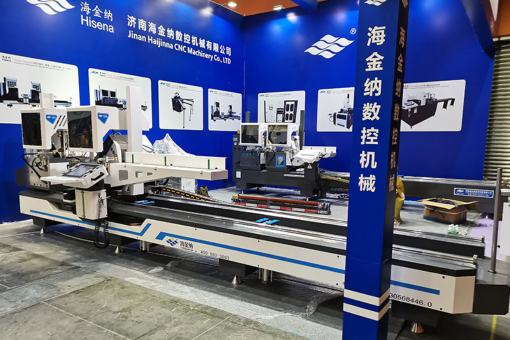
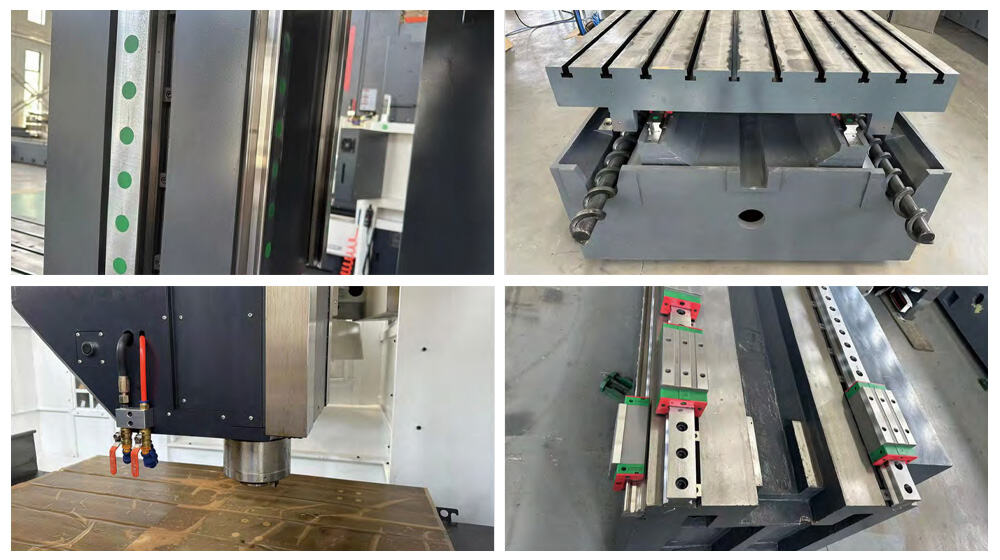
Gantry machining represents a sophisticated manufacturing solution designed to handle large-scale workpieces with exceptional precision and stability. This advanced machining technology features a bridge-like structure where the spindle moves along a horizontal beam supported by two vertical columns, creating a portal frame configuration that provides superior rigidity and accuracy. The gantry machining center excels in processing oversized components that conventional machines cannot accommodate, making it indispensable for industries requiring heavy-duty material removal operations. The main functions of gantry machining include milling, drilling, boring, and tapping operations on substantial workpieces made from various materials such as steel, aluminum, composites, and titanium alloys. The technological features distinguish this equipment through its robust construction, which minimizes vibration and deflection during cutting operations, ensuring consistent surface finishes and dimensional accuracy. Modern gantry machining centers incorporate computer numerical control systems that enable automated tool changes, multi-axis simultaneous movements, and complex contouring capabilities. The working envelope of these machines can extend to accommodate parts measuring several meters in length, width, and height, with some models capable of handling components weighing dozens of tons. Advanced thermal compensation systems maintain precision even during extended machining cycles by adjusting for temperature variations that could affect dimensional stability. The applications span across aerospace manufacturing for aircraft structural components, energy sector for turbine housings and generator frames, automotive industry for large molds and dies, shipbuilding for marine engine blocks, and construction equipment manufacturing. The versatility of gantry machining allows manufacturers to consolidate multiple operations into a single setup, reducing handling time and improving overall part accuracy by eliminating cumulative positioning errors associated with multiple machine transfers.
New Product Releases

The advantages of gantry machining deliver tangible benefits that directly impact your production efficiency and product quality. First and foremost, the exceptional stability provided by the bridge structure means your machining operations produce parts with tighter tolerances and superior surface finishes consistently. This stability translates into fewer rejected parts and reduced rework, saving both time and material costs. The ability to machine extremely large workpieces in a single setup eliminates the need to section parts into smaller segments, which traditionally required subsequent assembly and welding operations that compromised structural integrity and added labor expenses. Your production workflow becomes significantly more streamlined because gantry machining centers can perform multiple operations without repositioning the workpiece, reducing handling time and minimizing the risk of damage to partially completed parts. The rigid construction absorbs cutting forces effectively, allowing you to use aggressive cutting parameters that accelerate material removal rates without sacrificing precision, which means faster completion of projects and improved capacity utilization. Modern gantry machining equipment offers remarkable versatility, enabling you to process diverse materials and part geometries with the same machine, reducing capital investment compared to purchasing multiple specialized machines. The advanced control systems integrated into these machining centers provide user-friendly interfaces that simplify programming and operation, allowing your workforce to achieve optimal results with shorter training periods. Energy efficiency has improved substantially in contemporary gantry machining designs, incorporating features like regenerative braking systems and intelligent power management that reduce operating costs. The long-term reliability of gantry machining equipment means lower maintenance requirements and extended periods between service intervals, maximizing productive uptime. Your quality assurance processes benefit from the repeatability inherent in gantry machining, as each part produced maintains identical specifications within micron-level tolerances. The return on investment becomes evident through reduced labor costs per part, decreased material waste, faster turnaround times, and the ability to accept contracts for large component manufacturing that competitors without such equipment cannot fulfill. Additionally, the environmental footprint improves because single-setup machining reduces energy consumption compared to multiple operations across different machines, and the precision minimizes excess material removal that would otherwise become waste.

Latest News

Hisena 2019 Annual Meeting Celebrates Outstanding Employees and Teams with Awards, Games, and Lucky Draws

30

Apr

Hisena 2019 Annual Meeting Celebrates Outstanding Employees and Teams with Awards, Games, and Lucky Draws

View More
Hisena Debuts

30

Apr

Hisena Debuts "CNC High Precision Saw with Upgraded Wireless Transmission" at Guangdong Exhibition

View More
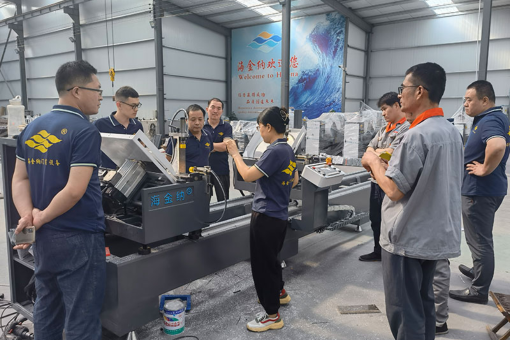
Hisena Production Staff Trains to Improve Installation Steps and Skills for Higher Quality Products

30

Apr

Hisena Production Staff Trains to Improve Installation Steps and Skills for Higher Quality Products

View More
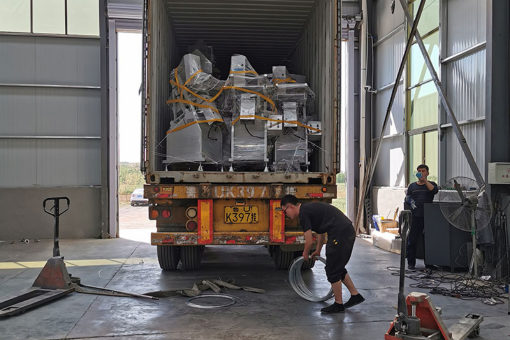
Hisena Family Worked Hard Loading Machines for Customers Under High Temperatures

30

Apr

Hisena Family Worked Hard Loading Machines for Customers Under High Temperatures

View More

Get a Free Quote

Our representative will contact you soon.
Name
Email
Telephone
Country
Company Name
Message
0/1000

gantry machining

Superior Structural Rigidity for Unmatched Precision

Superior Structural Rigidity for Unmatched Precision

The fundamental advantage of gantry machining lies in its exceptional structural rigidity, which forms the cornerstone of its precision capabilities and sets it apart from alternative machining solutions. The bridge-type configuration creates a mechanically advantageous design where two substantial vertical columns support a horizontal crossbeam, forming a portal frame that distributes cutting forces evenly across the entire structure. This architectural approach virtually eliminates the cantilever effect that plagues other machine designs, where extended tool holders create leverage that amplifies vibration and deflection. When your gantry machining center engages with tough materials under heavy cutting conditions, the symmetrical load distribution ensures that dimensional accuracy remains consistent across the entire working envelope, from the center of the table to the extreme edges. The massive construction incorporates reinforced castings and strategically positioned ribs that absorb and dampen vibrations before they can propagate through the structure and affect the cutting tool's position relative to the workpiece. This vibration control becomes particularly critical when machining thin-walled sections or performing finishing operations where surface quality directly impacts product performance. The thermal stability of gantry machining structures represents another dimension of their rigidity advantage, as the substantial mass acts as a heat sink that resists temperature fluctuations caused by ambient conditions or machining heat generation. Manufacturers integrate sophisticated thermal compensation algorithms that monitor temperature sensors throughout the structure and automatically adjust axis positions to counteract any expansion or contraction, maintaining positioning accuracy within micrometers even during extended production runs. The combination of mechanical rigidity and thermal stability enables your operations to achieve tolerances that would be impossible with less robust machine architectures, opening opportunities to manufacture precision components for demanding applications in aerospace, medical devices, and advanced technology sectors where dimensional requirements are unforgiving.
Comprehensive Large-Scale Machining Capability

Comprehensive Large-Scale Machining Capability

Gantry machining centers provide unparalleled capability for processing oversized components that exceed the capacity limitations of conventional machining equipment, addressing a critical manufacturing need across numerous industries. The scalable design architecture allows manufacturers to configure machines with working envelopes customized to specific production requirements, with travel distances extending from several meters to over twenty meters in length for specialized applications. This expansive capacity eliminates the compromises associated with sectioning large parts into smaller segments, which traditionally necessitated additional assembly operations that introduced potential alignment errors, structural weaknesses at joint locations, and increased labor costs. When you machine a complete structure as a single piece using gantry machining technology, the resulting component exhibits superior mechanical properties because material continuity remains uninterrupted throughout the entire geometry. The benefits extend beyond mere size accommodation to encompass the complexity of operations possible within a single setup. Modern gantry machining centers feature multi-axis capabilities, typically ranging from three-axis to five-axis configurations, enabling the cutting tool to approach the workpiece from virtually any angle without manual repositioning. This multi-axis functionality proves invaluable when machining compound curved surfaces, angled holes, and complex pockets that would require multiple setups on simpler machines, with each setup introducing cumulative positioning errors that degrade final part accuracy. The substantial load capacity of gantry machining tables accommodates workpieces weighing many tons, with robust clamping systems that secure these massive components against cutting forces without risking movement or distortion. Your production planning gains flexibility because the comprehensive machining envelope allows you to nest multiple smaller parts on the table simultaneously, optimizing machine utilization and reducing per-part cycle times through batch processing. The accessibility provided by the gantry structure facilitates workpiece loading and unloading operations, as the open architecture allows cranes and material handling equipment to position heavy components efficiently without interference from machine elements.
Advanced Automation Integration for Enhanced Productivity

Advanced Automation Integration for Enhanced Productivity

The integration of advanced automation technologies within gantry machining systems revolutionizes production efficiency and consistency, transforming these machines from simple cutting platforms into comprehensive manufacturing cells capable of extended autonomous operation. Modern gantry machining centers incorporate sophisticated tool management systems featuring magazines that house dozens or even hundreds of cutting tools, each precisely characterized within the control system database for automatic selection based on programmed operations. The automatic tool changer executes tool swaps in seconds, seamlessly transitioning between drilling, milling, boring, and tapping operations without manual intervention, dramatically reducing non-productive time and enabling lights-out manufacturing scenarios where machines continue production during unmanned shifts. The control systems governing gantry machining operations have evolved into intelligent platforms that optimize cutting parameters in real-time based on sensor feedback monitoring cutting forces, vibration levels, and acoustic emissions that indicate tool condition and material engagement. This adaptive control capability automatically adjusts feed rates and spindle speeds to maintain optimal cutting conditions, extending tool life while maximizing material removal rates and preventing costly tool breakage that could damage workpieces and interrupt production schedules. Advanced probing systems integrated into gantry machining centers perform automated workpiece measurement and alignment, eliminating manual setup procedures that consume valuable time and introduce operator-dependent variability. These measurement cycles verify part dimensions during machining operations, enabling immediate corrective adjustments if tolerances begin drifting due to tool wear or thermal effects, ensuring every component meets specifications without requiring post-process inspection and potential rework. The communication capabilities of contemporary gantry machining equipment facilitate integration into digital manufacturing ecosystems, where machines exchange data with enterprise resource planning systems, manufacturing execution systems, and quality management databases. This connectivity enables predictive maintenance strategies where machine health monitoring algorithms analyze performance data to forecast component failures before they occur, scheduling maintenance activities during planned downtime rather than experiencing unexpected breakdowns that disrupt production schedules. Your workforce productivity multiplies because operators can supervise multiple automated gantry machining centers simultaneously, intervening only when material replenishment or tool replacement becomes necessary, while the machines autonomously execute complex machining programs with consistent precision that exceeds manual capabilities.

Get a Free Quote

Our representative will contact you soon.
Name
Email
Telephone
Country
Company Name
Message
0/1000