Exceptional Workpiece Capacity Expanding Manufacturing Possibilities
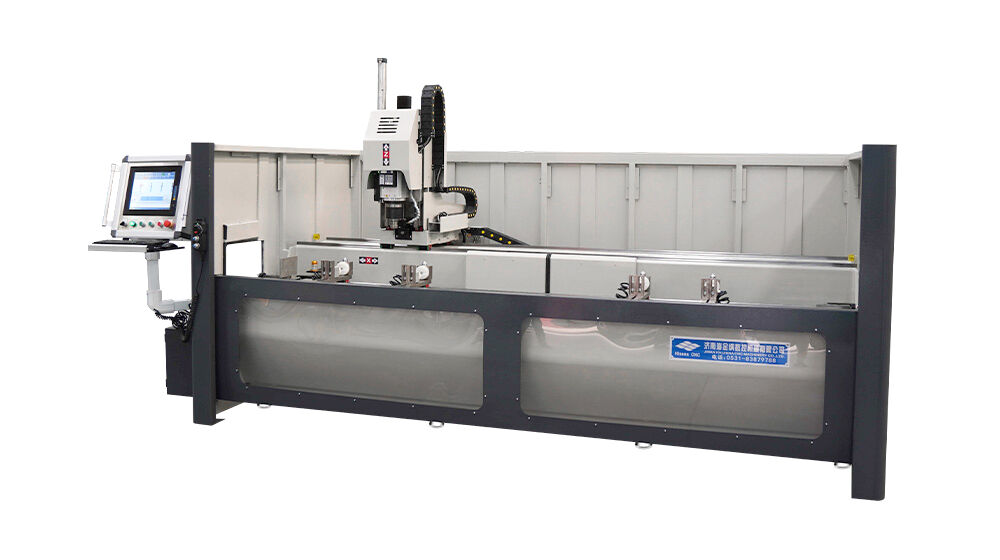
The generous working envelope provided by the double column milling machine opens manufacturing possibilities that remain completely inaccessible to facilities equipped with conventional machining centers, creating competitive advantages that directly translate to revenue opportunities and market differentiation. The space between the vertical columns accommodates workpieces measuring several meters in width, while the table length often extends beyond ten meters in large models, allowing manufacturers to process components like bridge sections, ship hull structures, wind turbine housings, and oversized industrial molds in single setups. This capacity eliminates the compromises and workarounds required when large components must be divided into smaller sections for machining on standard equipment, avoiding the alignment challenges and joint quality issues inherent in segmented manufacturing approaches. The table's weight capacity typically ranges from several tons to over one hundred tons depending on the specific double column milling machine model, supporting the massive castings and forgings common in heavy industry without requiring special fixtures or elaborate support systems. Manufacturers gain significant time savings because entire assemblies receive complete machining in one location rather than shuttling between multiple machines for different operations, reducing handling time, transportation risks, and the accumulation of positioning errors from repeated setups. The vertical clearance under the crossbeam permits tall workpieces like valve bodies, pump housings, and gearbox castings to be machined from multiple angles without interference, maximizing the utility of each setup. Operators appreciate the accessibility provided by the open architecture between columns, which facilitates safe crane operations for loading heavy workpieces and allows visual monitoring of the machining process from advantageous viewing angles. The double column milling machine configuration supports rotary tables and indexing fixtures that enable complete five-axis machining of complex geometries, transforming the machine into a comprehensive manufacturing solution rather than a single-purpose tool. This versatility proves especially valuable for job shops and contract manufacturers who must accommodate diverse customer requirements without maintaining separate specialized equipment for each workpiece type. The expanded capacity positions your facility to pursue contracts that competitors simply cannot fulfill, whether manufacturing custom industrial machinery components, producing tooling for automotive stamping operations, or fabricating specialized equipment for energy production facilities. Strategic investment in this capacity creates barriers to competition, as the capital requirements and facility infrastructure needed to support a double column milling machine exceed what many potential competitors can justify, protecting your market position in large-component manufacturing.
 ×
×


 EN
EN