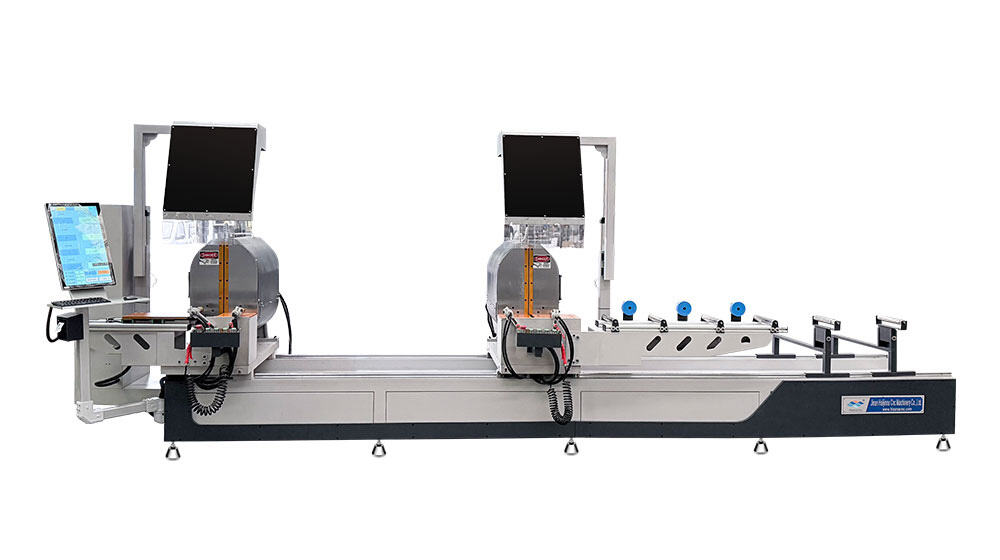
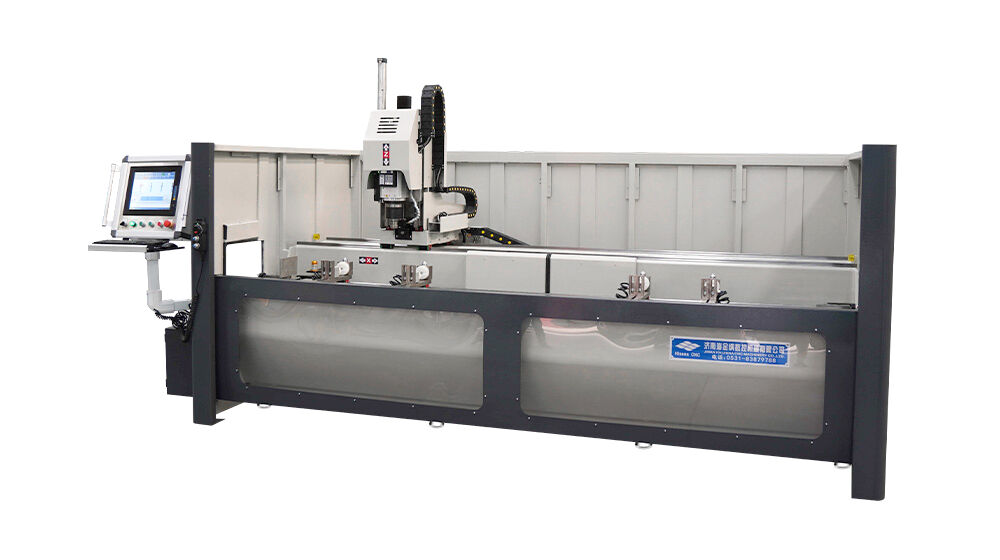
Gantry Type Milling Machine: Precision Large-Scale Machining Solutions for Industrial Manufacturing

Get a Free Quote

Our representative will contact you soon.
Name
Email
Telephone
Country
Company Name
Message
0/1000

gantry type milling machine

A gantry type milling machine represents a sophisticated metalworking solution designed for precision machining of large-scale workpieces across diverse industrial sectors. This robust equipment features a distinctive bridge-like structure where the milling head travels along horizontal beams supported by vertical columns on either side, creating a stable framework that spans over the work table. The gantry type milling machine excels in handling oversized components that exceed the capacity of conventional milling equipment, making it indispensable for aerospace, automotive, energy, and heavy machinery manufacturing. The main functions encompass multi-axis cutting, drilling, boring, and surface finishing operations with exceptional accuracy. Operators can machine complex geometries on materials ranging from aluminum alloys to hardened steel and titanium. The technological features include computer numerical control systems that enable automated operation, rigid construction that minimizes vibration during high-speed cutting, and generous working envelopes that accommodate components measuring several meters in length and width. Advanced models incorporate automatic tool changers holding dozens of cutting tools, rotary tables for multi-sided machining without repositioning workpieces, and sophisticated cooling systems that maintain thermal stability. The gantry configuration provides superior accessibility from multiple sides, facilitating setup procedures and inspection activities. Applications span manufacturing turbine components, ship propellers, large molds and dies, structural aerospace parts, railroad car components, and energy sector equipment. The machine proves particularly valuable when producing prototype parts, custom fabrications, and medium-volume production runs where flexibility matters. Industries requiring tight tolerances on substantial workpieces find this equipment essential for maintaining competitive manufacturing capabilities. The gantry type milling machine combines power, precision, and versatility in a single platform, addressing the specialized needs of facilities working with challenging dimensions and material specifications that demand unwavering reliability throughout extended machining cycles.
Popular Products

Investing in a gantry type milling machine delivers tangible benefits that directly impact your production efficiency and bottom line results. First, these machines handle extremely large workpieces that simply cannot fit on standard equipment, eliminating the need to outsource oversized jobs to specialized facilities. This capability keeps production in-house, reducing lead times and maintaining complete quality control throughout the manufacturing process. You gain scheduling flexibility and protect proprietary designs from external exposure. Second, the bridge structure provides exceptional rigidity that translates into superior surface finishes and dimensional accuracy. The stable framework resists deflection during aggressive cutting operations, allowing faster material removal rates without sacrificing precision. Your operators complete jobs quicker while meeting stringent tolerance requirements, boosting throughput and customer satisfaction. Third, the open gantry design offers outstanding accessibility from all sides of the work table. Technicians load heavy components using overhead cranes with ease, position fixturing without spatial constraints, and perform in-process measurements without complicated disassembly. This accessibility reduces setup times significantly, letting you switch between different jobs rapidly and respond to urgent customer requests. Fourth, modern gantry type milling machine models feature advanced automation that minimizes labor costs and human error. Computer controls execute complex toolpaths with repeatability, while automatic tool changers swap cutters in seconds without operator intervention. Your skilled workers focus on programming and oversight rather than manual machine operation, maximizing their expertise. Fifth, these machines prove remarkably versatile, performing multiple operations in a single setup. Drilling, milling, boring, and tapping occur without repositioning the workpiece, eliminating cumulative positioning errors and reducing handling damage risks. This consolidation streamlines workflows and decreases overall production time per component. Sixth, the substantial construction ensures longevity and consistent performance across decades of service. Quality gantry type milling machine equipment withstands demanding industrial environments, maintaining accuracy despite continuous operation. Your capital investment delivers returns over extended periods, with predictable maintenance requirements and strong resale values. Seventh, the capacity to machine large parts from solid billets reduces welding and assembly requirements. Fabricating components as single pieces enhances structural integrity, eliminates weld-related defects, and simplifies quality assurance procedures. Your products exhibit superior reliability and performance characteristics that differentiate your offerings in competitive markets. These practical advantages combine to make the gantry type milling machine a strategic asset that enhances manufacturing capabilities, improves operational efficiency, and supports business growth objectives in industries where size and precision determine success.

Practical Tips

Hisena Launches New Intelligent Wireless Transmission Solution at Linqu Window Door Exhibition

14

May

Hisena Launches New Intelligent Wireless Transmission Solution at Linqu Window Door Exhibition

View More
Indian customers came and visited Hisena factory

30

Apr

Indian customers came and visited Hisena factory

View More
Hisena Exhibits in Beijing, Equipment Highly Popular Among Customers

30

Apr

Hisena Exhibits in Beijing, Equipment Highly Popular Among Customers

View More
Hisena Debuts

30

Apr

Hisena Debuts "CNC High Precision Saw with Upgraded Wireless Transmission" at Guangdong Exhibition

View More

Get a Free Quote

Our representative will contact you soon.
Name
Email
Telephone
Country
Company Name
Message
0/1000

gantry type milling machine

Unmatched Capacity for Large-Scale Manufacturing Projects

Unmatched Capacity for Large-Scale Manufacturing Projects

The gantry type milling machine stands out primarily for its exceptional ability to handle workpieces of extraordinary dimensions that far exceed the limitations of conventional machining equipment. This capacity advantage addresses a critical need in industries manufacturing components where size directly correlates with functional requirements. Aerospace manufacturers rely on these machines to produce bulkhead sections, wing spars, and fuselage components that span several meters yet demand micron-level precision. Energy sector facilities machine turbine housings, generator frames, and pressure vessel components that weigh multiple tons and require continuous cutting operations across extensive surface areas. The bridge configuration creates working envelopes measuring up to ten meters in length, four meters in width, and three meters in vertical clearance, providing ample room for oversized parts while maintaining structural stability throughout machining cycles. This generous capacity eliminates the compromises associated with segmented manufacturing approaches where large parts get divided into smaller sections for machining on standard equipment, then welded or bolted together. Such assembly methods introduce alignment challenges, stress concentrations at joints, and potential failure points that compromise component integrity. By machining large workpieces as single units, the gantry type milling machine ensures dimensional consistency, eliminates assembly errors, and produces parts with superior mechanical properties. The financial implications prove equally significant, as manufacturers avoid the expenses associated with specialized fixturing for multiple smaller components, the labor costs of assembly operations, and the quality control procedures required to verify joint integrity. Production scheduling becomes simpler when one machine completes an entire component rather than coordinating workflows across multiple departments. Lead times shrink dramatically, enabling faster response to customer orders and reducing inventory carrying costs. Furthermore, the capacity to handle large workpieces positions manufacturers to pursue contracts and projects that competitors with conventional equipment cannot accommodate, opening new market opportunities and revenue streams. The investment in a gantry type milling machine effectively expands your addressable market by qualifying your facility for specialized applications where size represents a fundamental technical requirement rather than merely a preference or convenience factor in manufacturing strategy.
Precision Engineering Delivered Through Rigid Construction

Precision Engineering Delivered Through Rigid Construction

The structural design of the gantry type milling machine fundamentally enhances machining precision through engineering principles that maximize rigidity while accommodating large working volumes. The bridge framework creates a mechanically stable platform where cutting forces get distributed across substantial structural members rather than concentrated on cantilevered components prone to deflection. Heavy-duty vertical columns anchored to the facility floor support horizontal beams constructed from high-grade steel or composite materials specifically engineered for stiffness and damping characteristics. This architecture maintains geometric accuracy during cutting operations that generate significant forces, vibrations, and thermal fluctuations. When milling hardened materials or performing heavy roughing cuts, conventional machines often experience tool deflection that compromises dimensional accuracy and surface finish quality. The gantry type milling machine resists these disturbances through mass and structural design, maintaining consistent tool positioning relative to the workpiece throughout extended machining cycles. The practical result appears in tighter tolerances, smoother surface textures, and longer tool life due to stable cutting conditions. Manufacturers achieve finish-machined surfaces directly from the milling operation, eliminating secondary grinding or polishing processes that add cost and time. The precision capabilities prove particularly valuable when machining complex contoured surfaces where mathematical accuracy translates directly into functional performance. Aerospace components with aerodynamic profiles, medical implants with biocompatible surface finishes, and mold cavities that replicate intricate product designs all demand precision that inferior equipment cannot reliably deliver. Beyond immediate machining accuracy, the rigid construction ensures long-term geometric stability as the machine ages. Quality gantry type milling machine models maintain factory specifications across years of production because structural components resist wear and deformation that gradually degrade accuracy in less robust equipment. Calibration intervals extend, unplanned downtime decreases, and process capability indices remain consistent over the equipment lifecycle. This reliability protects production schedules from unexpected disruptions while preserving the quality reputation that manufacturers build with customers. Investment in precision through superior structural design ultimately reduces total cost of ownership by eliminating scrap from dimensional errors, minimizing rework requirements, and supporting premium pricing for high-quality products that meet exacting specifications consistently across production volumes.
Operational Efficiency Through Advanced Automation Integration

Operational Efficiency Through Advanced Automation Integration

Modern gantry type milling machine equipment incorporates sophisticated automation technologies that transform manufacturing efficiency by reducing cycle times, minimizing labor requirements, and enhancing process consistency beyond what manual operation can achieve. Computer numerical control systems serve as the foundation, translating digital part models into precise machine movements that execute complex toolpaths with perfect repeatability. Operators program machining sequences using intuitive software interfaces, simulating operations virtually to identify potential collisions or inefficiencies before cutting actual material. This digital workflow eliminates the trial-and-error approach that wastes materials and machine time while reducing the specialized knowledge required for operation. Automatic tool changers represent another critical automation feature, storing dozens of cutting tools in rotating magazines that swap implements in seconds based on programmed sequences. The gantry type milling machine completes diverse operations without manual intervention, running unattended during night shifts or weekends to maximize equipment utilization. Facilities effectively gain additional production capacity from existing assets rather than purchasing multiple specialized machines for different operations. Integrated measurement systems provide real-time process monitoring, using touch probes and laser scanners to verify dimensions during machining and automatically adjust toolpaths when deviations occur. This closed-loop control maintains quality without operator inspection between operations, catching errors immediately rather than discovering problems after completing entire batches. Predictive maintenance algorithms monitor vibration signatures, temperature patterns, and power consumption to identify developing mechanical issues before failures occur, scheduling service during planned downtime rather than experiencing unexpected breakdowns. The automation capabilities extend to workpiece handling through interfaces with robotic loading systems and automated pallet changers that stage components for sequential machining. These integrated systems create continuous production flows where the gantry type milling machine remains productive while operators focus on value-added activities like process optimization, quality assurance, and production planning. Labor costs decrease relative to output volumes, while consistency improves as human variability gets removed from repetitive tasks. Manufacturers gain competitive advantages through faster delivery times, lower per-unit costs, and quality levels that manual operations struggle to match. The automation integration transforms the gantry type milling machine from a manually-operated tool into an intelligent manufacturing system that aligns with modern industry requirements for flexibility, efficiency, and data-driven process control across diverse production scenarios.

Get a Free Quote

Our representative will contact you soon.
Name
Email
Telephone
Country
Company Name
Message
0/1000