
 EN


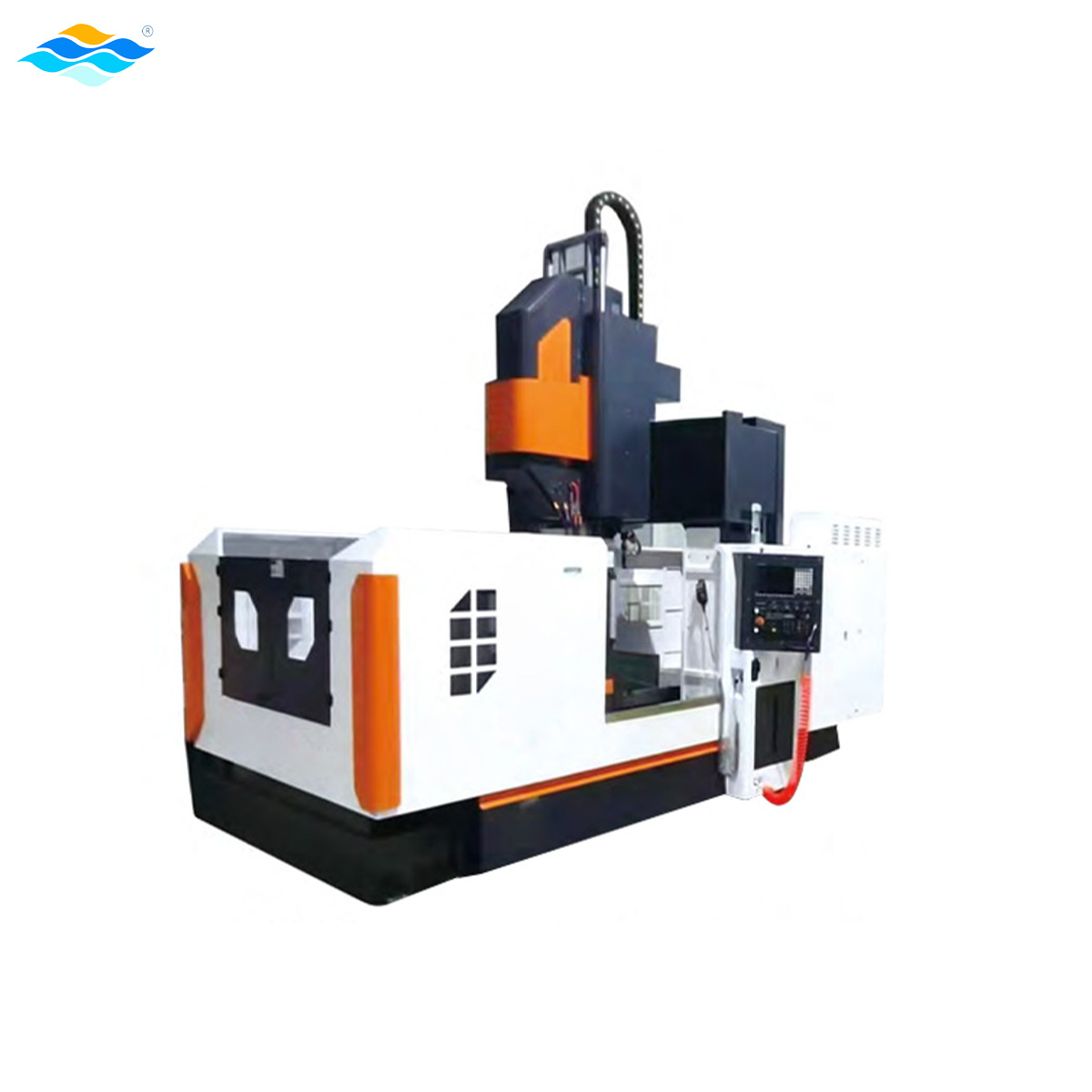
The gantry milling machine represents a fundamental shift in how manufacturers approach large format workpiece machining. Unlike traditional vertical milling centers that constrain workpiece dimensions, a gantry milling machine features a bridge-style architecture that spans horizontally over a stationary worktable, enabling machining operations on exceptionally large parts. This design philosophy has transformed industries ranging from aerospace component fabrication to heavy equipment manufacturing. A gantry milling machine delivers unmatched rigidity, thermal stability, and precision control when machining oversized components that conventional machine tools cannot accommodate effectively.
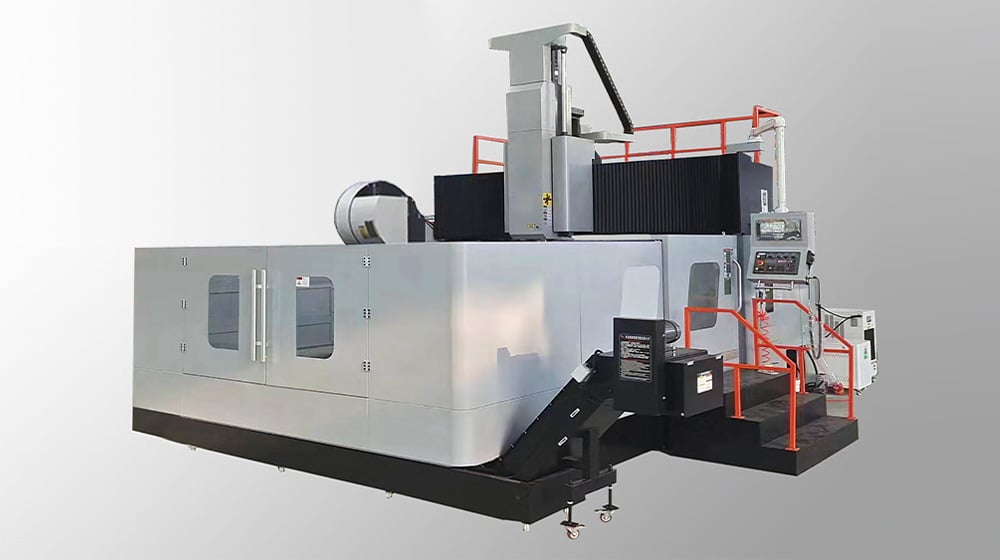
A gantry milling machine combines massive structural support with multi-axis cutting capability to handle demanding large format machining tasks. The bridge or gantry structure provides exceptional beam rigidity while distributing cutting loads across multiple support points. This architecture allows a gantry milling machine to maintain tight dimensional tolerances even during heavy roughing operations on large workpieces. Organizations requiring large format machining capabilities recognize that investing in a gantry milling machine fundamentally changes their production capacity and competitive positioning within precision manufacturing markets.
Core Design Architecture and Structural Innovation
Gantry Frame Configuration
A gantry milling machine employs a cantilever or portal frame design where the cutting spindle travels along a horizontal beam suspended between two rigid vertical columns. This configuration distinguishes a gantry milling machine from traditional bed milling machines because the workpiece remains stationary on the table while the tool moves above it. The bridge structure of a gantry milling machine allows engineers to mount workpieces of virtually any horizontal dimension, limited primarily by factory floor space rather than machine geometry. The stationary workpiece approach inherent to a gantry milling machine provides significant advantages for large format machining, including simplified workholding, reduced setup complexity, and improved operator safety during tool changes.
Structural Rigidity and Precision
The exceptional stiffness of a gantry milling machine comes from its box-beam construction and multi-point support system. When a gantry milling machine operates, cutting forces distribute across the broad bridge structure rather than concentrating on a single spindle axis. This load distribution means a gantry milling machine maintains dimensional accuracy across long production runs involving large format machining. High-precision ball screws, linear motion guides, and closed-loop feedback systems integrated into modern a gantry milling machine ensure that workpiece tolerances remain consistent whether machining the first part or the thousandth. The inherent stability of a gantry milling machine makes it the preferred platform for applications demanding micron-level accuracy on components measuring tens of meters in length.
Large Format Machining Capabilities and Applications
Extended Workpiece Envelope
Large format machining becomes economically feasible when performed on a gantry milling machine because the machine architecture imposes virtually no size constraints on the workpiece. A typical gantry milling machine accommodates workpieces ranging from 5 meters to 20 meters in length, with depths approaching 3 to 5 meters depending on table configuration. Industries requiring large format machining, such as aerospace, automotive tooling, and marine manufacturing, standardize on a gantry milling machine to eliminate secondary handling operations. For large format machining applications, a gantry milling machine transforms part fabrication workflows by consolidating multiple operations that traditionally required transfers between different machine tools. This consolidation reduces lead times, minimizes part damage risk, and improves first-pass quality for large format machining projects.
Multi-Axis Cutting Precision
Modern a gantry milling machine typically features 5 to 9 axes of motion, enabling simultaneous multi-plane cutting for large format machining. Five-axis configurations on a gantry milling machine allow engineers to machine complex surfaces, cavity features, and undercut geometries without part repositioning. When planning large format machining sequences, designers leverage the advanced interpolation capabilities of a gantry milling machine to minimize tool path redundancy and accelerate cycle times. The continuous spindle rotation combined with controlled table tilting available on advanced a gantry milling machine platforms enables simultaneous finish and semi-finish operations during large format machining. Organizations executing large format machining operations on a gantry milling machine experience significant reductions in total machining time compared to conventional multi-step approaches.
Operational Excellence and Return on Investment
Production Efficiency Gains
A gantry milling machine optimizes throughput by combining large format machining envelope capacity with rapid tool change systems and automated fixture interfaces. Setup time reduction represents one of the most valuable benefits of utilizing a gantry milling machine for large format machining because complex workpieces mount once and complete machining without intermediate transfers. The predictable cycle time characteristics of a gantry milling machine allow manufacturers to quote lead times with confidence when executing large format machining contracts. Thermal compensation systems embedded in advanced a gantry milling machine control architectures automatically adjust for ambient temperature variations, ensuring large format machining accuracy throughout extended production shifts. Companies implementing a gantry milling machine for large format machining report productivity increases ranging from 30 to 50 percent compared to previous sequential machining approaches.
Quality Assurance and Traceability
Integrated measurement systems on modern a gantry milling machine platforms enable real-time quality verification during large format machining operations. Many manufacturers operate a gantry milling machine with in-process probing capabilities that automatically validate critical dimensions and trigger corrective adjustments. This quality integration makes a gantry milling machine ideally suited for large format machining applications in regulated industries including aerospace and defense sectors. The complete machining history captured by a gantry milling machine control systems provides traceability documentation essential for large format machining projects subject to strict compliance requirements. Organizations deploying a gantry milling machine for large format machining consistently achieve process capability indices exceeding 1.67, demonstrating superior dimensional control.
FAQ
What makes a gantry milling machine superior for large format machining compared to traditional vertical mills?
A gantry milling machine excels at large format machining because the bridge architecture positions the stationary workpiece below the moving spindle system, eliminating the dimensional constraints inherent in traditional machines. Vertical milling machines require workpieces small enough to fit within their spindle envelope, restricting maximum workpiece size. A gantry milling machine designed for large format machining allows workpieces extending 10 to 20 meters without compromising rigidity or precision. The distributed load path through the gantry structure means large format machining cuts generate lower stress concentrations than concentrated loads in spindle-based machines. For any large format machining project, a gantry milling machine delivers faster cycle times, fewer setup transitions, and superior part quality compared to alternatives.
How does a gantry milling machine maintain precision during heavy cutting in large format machining operations?
A gantry milling machine maintains exceptional rigidity during large format machining through its box-beam construction and multi-point support distributed across the bridge span. Large format machining cutting forces transmit through the entire gantry structure rather than concentrating on a single spindle bearing, allowing a gantry milling machine to withstand heavier feeds and speeds. Real-time feedback from linear encoders and thermal compensation systems enable a gantry milling machine to self-correct for deflection during large format machining. The proven design of a gantry milling machine for large format machining routinely achieves geometric tolerance stack-ups tighter than ±0.05 millimeters on parts measuring multiple meters. This capability demonstrates how a gantry milling machine fundamentally changes large format machining performance compared to other machine classes.
What industries benefit most from investing in a gantry milling machine for large format machining?
Aerospace suppliers rely on a gantry milling machine for large format machining of fuselage sections, wing components, and structural assemblies that exceed capacity of traditional equipment. Automotive suppliers operate a gantry milling machine for large format machining of complex tooling dies, fixtures, and prototype components. The marine industry depends on a gantry milling machine for large format machining of propeller shafts, hull sections, and structural frames. Heavy equipment manufacturers utilize a gantry milling machine for large format machining of transmission housings, engine blocks, and frame assemblies. Any organization producing components exceeding 5 meters in any dimension should evaluate whether a gantry milling machine addresses large format machining requirements and would generate measurable return on investment within existing production schedules.
Table of Contents
- Core Design Architecture and Structural Innovation
- Large Format Machining Capabilities and Applications
- Operational Excellence and Return on Investment
-
FAQ
- What makes a gantry milling machine superior for large format machining compared to traditional vertical mills?
- How does a gantry milling machine maintain precision during heavy cutting in large format machining operations?
- What industries benefit most from investing in a gantry milling machine for large format machining?