
 EN


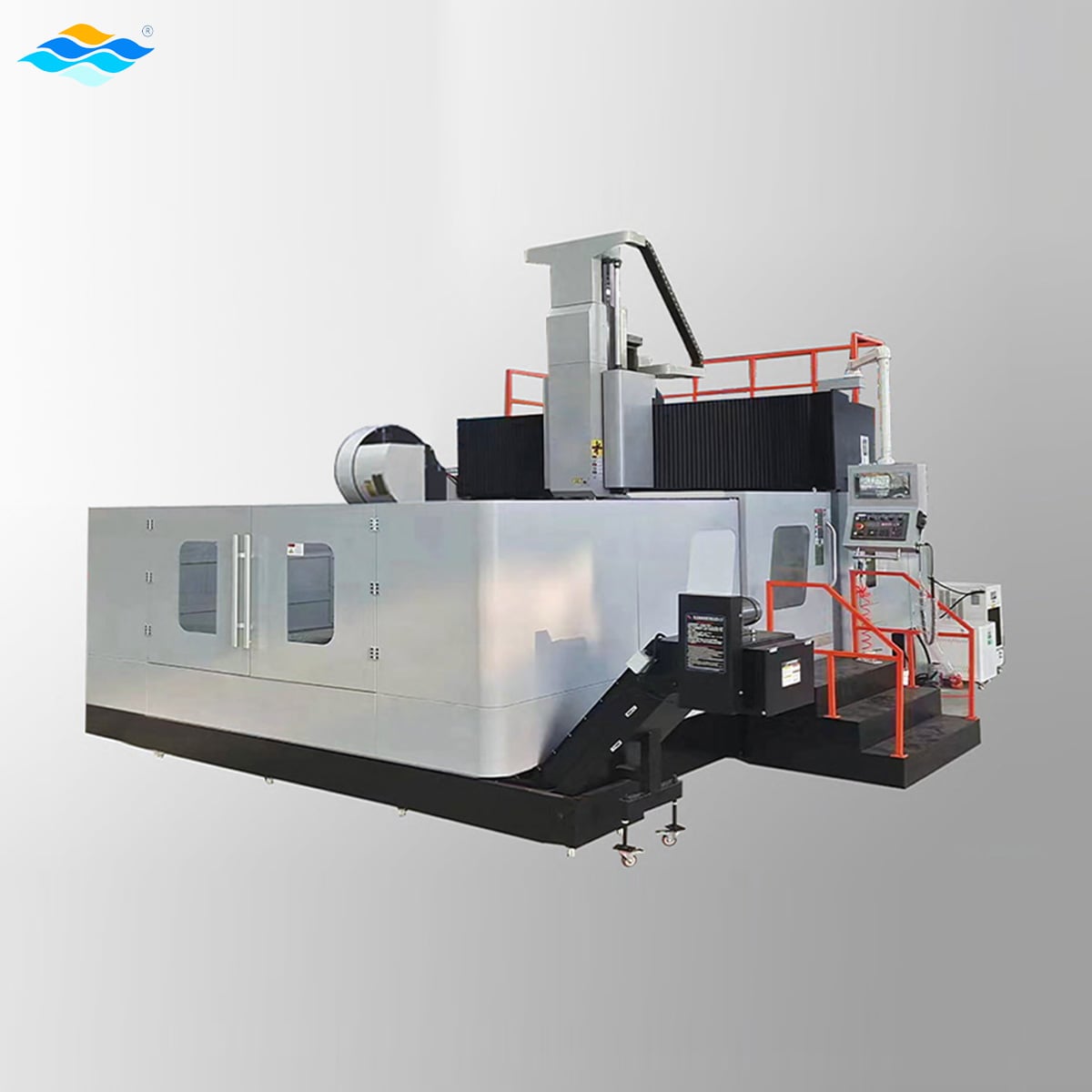
Railway infrastructure represents one of the most demanding sectors for precision engineering and heavy-duty machining. The gantry milling machine has become indispensable across rail industries, enabling manufacturers and maintenance teams to achieve exact tolerances on complex rail components, trackside equipment, and structural assemblies. Whether producing new rail systems or restoring aging infrastructure, the gantry milling machine delivers the scale, accuracy, and reliability that modern railways demand. Understanding how this equipment transforms railway construction and maintenance workflows is essential for infrastructure planners, procurement specialists, and engineering teams seeking operational excellence.
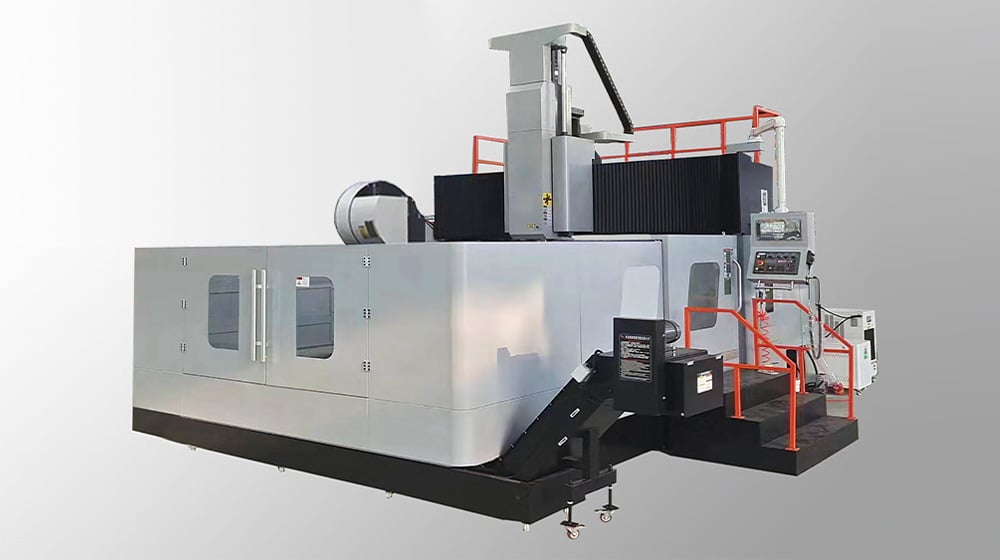
Rail networks span continents and require consistent, high-precision components to ensure safe, efficient operations. A gantry milling machine addresses this requirement by combining large working envelopes with submicron repeatability, allowing rail manufacturers and maintenance facilities to process everything from rail stock and bearing assemblies to bridge components and switch mechanisms. The versatility and power of the gantry milling machine make it a strategic asset for any organization managing modern railway infrastructure at scale.
Rail Component Manufacturing and Precision Production
Machining Rail Stock and Track Components
Production of rail stock demands extreme dimensional consistency. The gantry milling machine excels at facing, profiling, and finishing long rail sections with uniform precision across their entire length. Modern gantry milling machine systems feature rigid spindle supports and multi-axis control that eliminate deflection during interrupted cuts, ensuring rail head geometry conforms to international standards. Rail gauge, wear-resistant profile geometry, and stress-relief features all depend on the accuracy that only a dedicated gantry milling machine can deliver consistently.
Track fasteners, switch blades, and junction components require similar attention to tolerance bands and surface finish. The gantry milling machine can handle batch production runs where individual components weigh hundreds of kilograms, maintaining edge radii, flange dimensions, and contact surfaces within tight specifications. This capability directly reduces defect rates, increases track safety, and extends maintenance intervals across the rail network.
Bearing Housings and Rotational Equipment
Railway vehicles and trackside equipment rely on precision-machined bearing housings to ensure reliable rotation and minimize wear. The gantry milling machine produces bore diameters, shoulder faces, and oil passages with the repeatability needed for bearing preload and lubrication reliability. Circular accuracy, surface finish, and geometric concentricity are non-negotiable in this application, and the gantry milling machine delivers these requirements across high-volume production schedules.
Infrastructure Maintenance and Component Restoration
Field Service and Depot Repair Operations
Rail depots and maintenance facilities face constant pressure to repair damaged components quickly without compromising safety. The gantry milling machine enables in-service restoration of worn bearings, damaged brake components, and structural frame sections by re-machining critical surfaces to original specifications. Large working envelopes allow the gantry milling machine to accommodate oversized assemblies that cannot fit on conventional spindles, making depot operations more efficient and reducing vehicle downtime.
Corroded or worn rail surfaces can be restored using the gantry milling machine to re-establish proper head geometry and contact profiles before re-installation. This restoration capability extends rail service life, defers replacement infrastructure costs, and keeps maintenance teams operating at peak efficiency. The flexibility of the gantry milling machine to adapt to varying repair scenarios without setup time makes it invaluable for busy rail maintenance centers.
Bridge and Structural Component Machining
Railway bridges, viaducts, and elevated track structures incorporate machined steel and cast-iron components that must maintain dimensional integrity for safe load transfer. The gantry milling machine handles large castings and fabricated assemblies that form bridge piers, expansion joints, and support brackets. Bore alignment, flange flatness, and dimensional accuracy on these structural elements directly influence track alignment and long-term durability.
Connection points, dowel holes, and mounting surfaces on bridge components demand precision that general-purpose machinery cannot reliably achieve. The gantry milling machine provides the rigid platform and multi-axis coordination needed to machine complex connection geometry while maintaining datum relationships across assembled structures. This capability supports faster bridge assembly schedules and reduces field fitting and adjustment work.
Advanced Capabilities and Operational Efficiency Gains
Multi-Axis Programming and Complex Geometry
Modern gantry milling machine systems feature five- and six-axis simultaneous control, enabling production of complex contoured rail components, switch mechanisms, and curved brake assemblies without repositioning. Programmable tool changers and automated workholding systems integrated into the gantry milling machine reduce manual handling and increase throughput significantly. Computer-aided design integration allows engineers to translate infrastructure specifications directly into gantry milling machine tool paths, minimizing setup errors and enabling rapid iteration on design improvements.
Thermal Stability and Dimensional Repeatability
Precision gantry milling machine platforms employ thermal compensation systems that maintain working envelope accuracy despite temperature fluctuations in busy industrial environments. Linear encoders provide real-time position feedback, ensuring that each component produced on the gantry milling machine stays within specification regardless of ambient conditions or run duration. This thermal stability is critical for rail applications where dimensional drift can accumulate across large batch runs and compromise fit-up or safety performance.
Spindle speed control, coolant circulation, and servo motor tuning on the gantry milling machine work in concert to minimize vibration and chatter during heavy interrupted cuts. These systems protect both the workpiece and the machine itself, extending gantry milling machine service life and reducing maintenance overhead. Predictive monitoring on advanced gantry milling machine platforms alerts operators to wear conditions before they impact part quality.
FAQ
What specific tolerances can a gantry milling machine hold for railway components?
A precision gantry milling machine can consistently maintain tolerances in the range of ±0.01 to ±0.05 millimeters on critical rail components, depending on material, tool geometry, and setup rigor. Rail head profiles, bearing bore diameters, and contact surfaces benefit from this repeatability, which aligns with international railway standards. Environmental control and regular calibration help a gantry milling machine sustain these tight windows across production runs lasting hundreds or thousands of parts.
How does a gantry milling machine reduce maintenance downtime at rail facilities?
A gantry milling machine enables depot teams to restore worn or damaged components to original specifications without ordering new parts or waiting for external suppliers. Its large working envelope accommodates complete assemblies, eliminating disassembly time and keeping components aligned during restoration. Rapid setup and changeover capabilities mean that a gantry milling machine can address urgent repairs during scheduled maintenance windows, keeping trains operational and reducing costly service disruptions.
Can a gantry milling machine handle different rail material types and hardnesses?
Yes, a gantry milling machine is equipped with variable spindle speeds, multiple tool materials, and adjustable feed rates that allow efficient machining of mild steel rail stock, hardened alloy materials, and cast-iron fixtures common in railway infrastructure. Advanced gantry milling machine models feature adaptive feedrate control that adjusts cutting parameters in real time based on load sensing, maintaining productivity while preventing tool breakage across material transitions within a single setup.