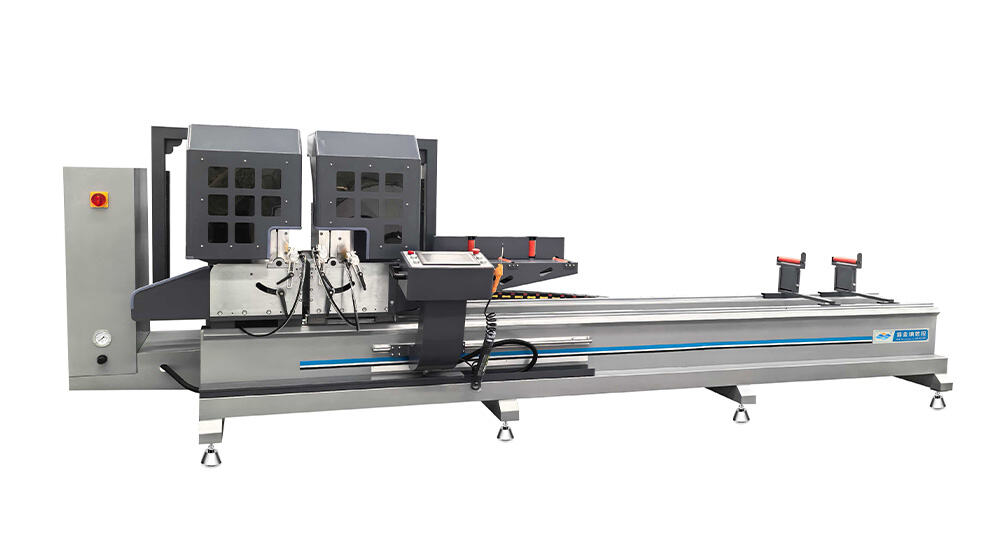
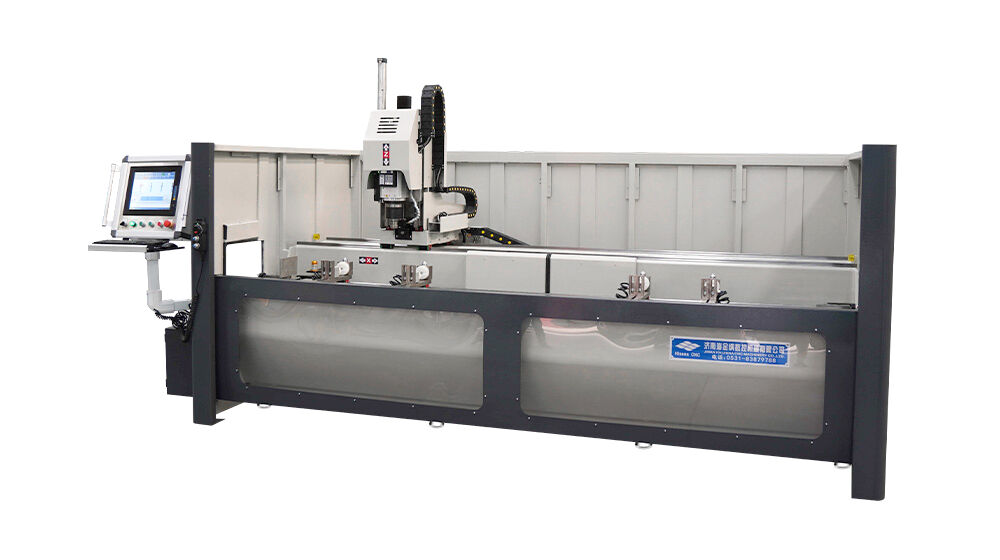
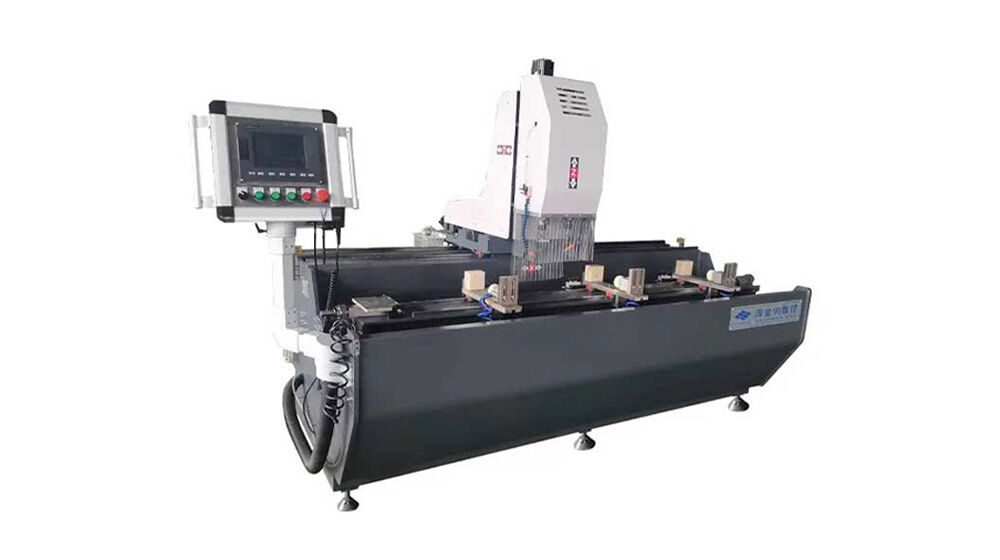
Aluminium Extrusion Cutting Machine - Precision Cutting Solutions for Industrial Manufacturing

Get a Free Quote

Our representative will contact you soon.
Name
Email
Telephone
Country
Company Name
Message
0/1000

aluminium extrusion cutting machine

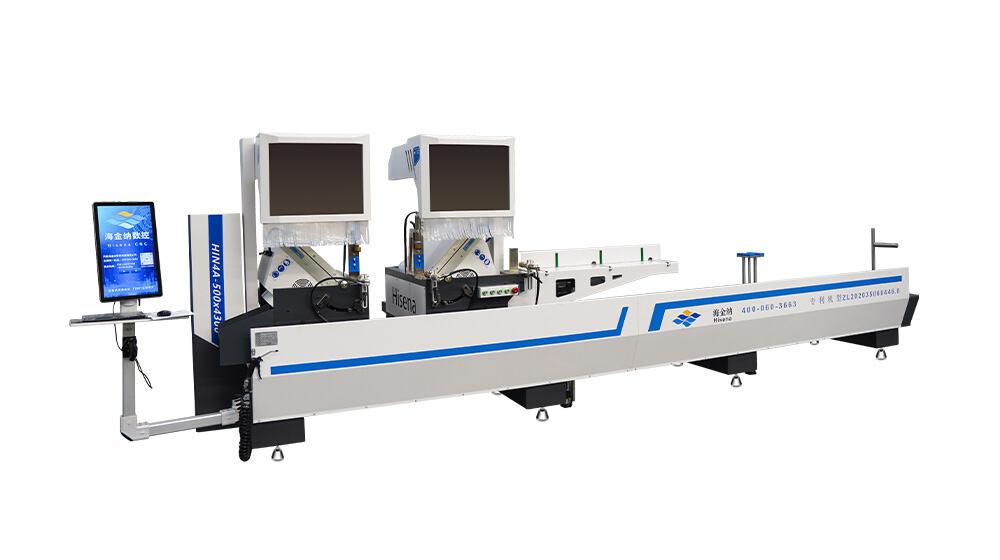
An aluminium extrusion cutting machine represents a specialized piece of industrial equipment designed to precisely cut extruded aluminium profiles into specific lengths with exceptional accuracy and efficiency. This sophisticated machinery serves as an essential component in manufacturing operations where aluminium profiles are processed for various applications across construction, automotive, aerospace, and fabrication industries. The primary function of an aluminium extrusion cutting machine involves receiving continuous or lengthy aluminium extrusions and cutting them to predetermined dimensions with minimal material waste and maximum precision. Modern aluminium extrusion cutting machines incorporate advanced servo motor systems that control blade positioning and cutting speed, ensuring consistent results across thousands of cuts. The technological features include programmable logic controllers that allow operators to input specific cutting measurements, automated feeding mechanisms that position the material accurately, and high-speed carbide or diamond-tipped saw blades capable of cleanly slicing through various aluminium alloys without causing deformation or burring. Many contemporary models feature digital displays showing real-time cutting parameters, automatic lubrication systems to maintain blade performance, and integrated safety mechanisms including blade guards and emergency stop functions. The applications of aluminium extrusion cutting machines span numerous sectors where precision-cut aluminium components are required. In the window and door manufacturing industry, these machines cut frame profiles to exact specifications for residential and commercial installations. Furniture manufacturers utilize them to process aluminium components for modern office systems and home furnishings. The automotive sector employs these machines to prepare aluminium structural elements and trim pieces. Solar panel frame production relies heavily on accurate aluminium profile cutting to ensure proper assembly and weatherproofing. Industrial ladder manufacturers depend on these machines to create uniform rung and rail sections. The versatility of aluminium extrusion cutting machines allows them to handle various profile shapes including square, rectangular, round, and custom-designed extrusions, making them indispensable tools in modern aluminium processing facilities where productivity and precision determine competitive advantage in the marketplace.

New Product Releases

Investing in an aluminium extrusion cutting machine delivers substantial benefits that directly impact your production efficiency and bottom line. The first major advantage centers on precision cutting capabilities that consistently deliver accurate results within tolerances of plus or minus 0.5 millimeters, ensuring every piece meets exact specifications without requiring manual adjustments or secondary finishing operations. This level of accuracy eliminates costly mistakes and reduces material rejection rates significantly. The speed at which these machines operate transforms production schedules, with modern units capable of completing dozens of cuts per minute depending on material thickness and profile complexity, allowing manufacturers to fulfill large orders promptly and respond quickly to customer demands. Automated feeding systems integrated into aluminium extrusion cutting machines remove the physical burden from operators while simultaneously improving workplace safety by keeping hands away from cutting zones, reducing the risk of accidents and creating a more secure working environment for your team. The consistent cutting quality achieved through computerized controls means every piece matches the next, which proves particularly valuable when producing components that must fit together precisely during assembly, eliminating frustrating compatibility issues and reducing assembly time. Material waste reduction represents another significant financial advantage, as optimized cutting patterns programmed into the machine controller minimize scrap generation, allowing you to extract maximum value from every metre of aluminium extrusion purchased. Lower operational costs emerge from reduced labor requirements since one operator can typically manage an aluminium extrusion cutting machine that would otherwise require multiple workers using manual cutting methods, freeing up personnel for other value-adding tasks within your facility. Energy efficiency built into modern machines means lower electricity consumption compared to older cutting technologies, contributing to reduced operating expenses and supporting environmental sustainability goals. The durability and reliability of quality aluminium extrusion cutting machines translate to minimal downtime, with robust construction and readily available replacement parts ensuring continuous operation and dependable performance year after year. Flexibility to handle various aluminium profiles without extensive retooling allows manufacturers to diversify their product offerings and respond to changing market demands without major capital investments. Quick setup times between different cutting jobs mean less idle equipment and higher overall equipment effectiveness. The clean, burr-free cuts produced by precision saw blades eliminate secondary deburring operations, saving additional processing time and labor costs. Noise reduction features incorporated into modern designs create a more pleasant working environment and help companies comply with workplace safety regulations regarding sound exposure. Digital measurement displays and programmable memory functions simplify operation and reduce training time for new employees, accelerating workforce onboarding and maintaining productivity during staff transitions. The return on investment for an aluminium extrusion cutting machine typically manifests within months through accumulated savings in labor, material waste, and increased production capacity that enables revenue growth.

Practical Tips

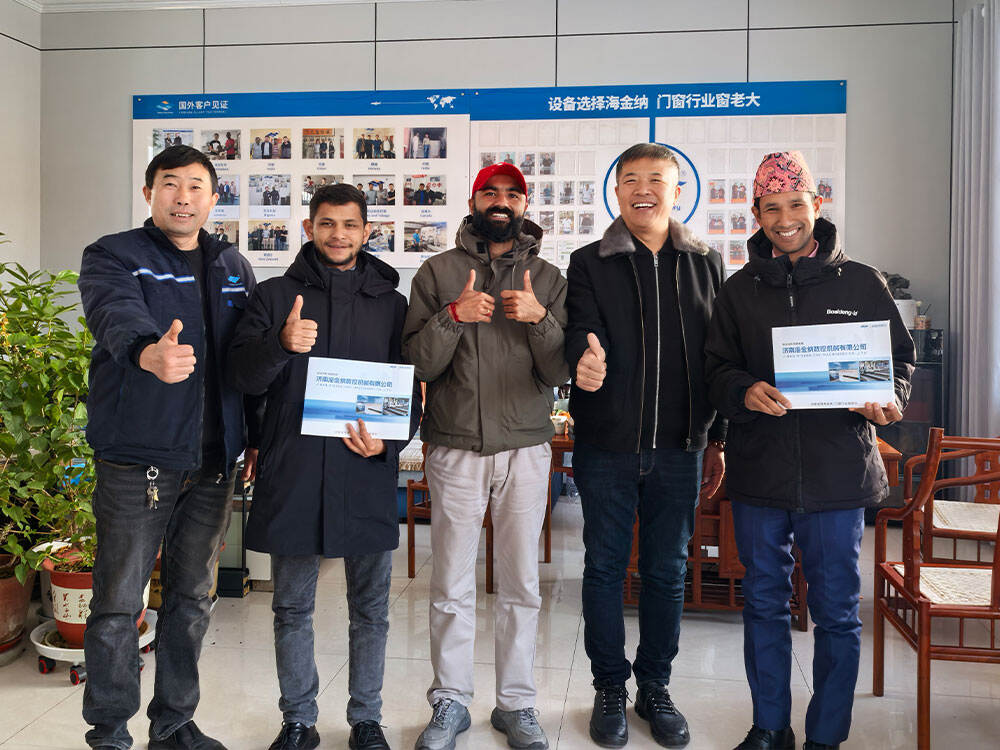
Nepalese Client Returns: Hisena Is the First Choice for Equipment!

30

Apr

Nepalese Client Returns: Hisena Is the First Choice for Equipment!

View More
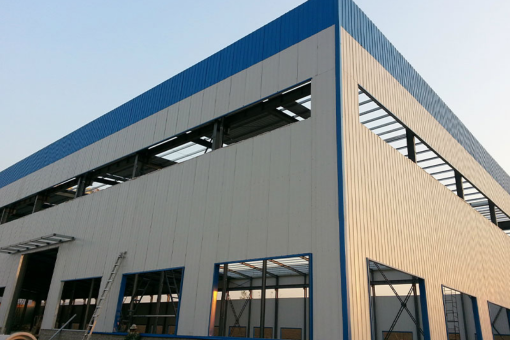
Hisena's New Factory Under Construction While Ensuring Timely Completion and Shipment of Customer Orders

30

Apr

Hisena's New Factory Under Construction While Ensuring Timely Completion and Shipment of Customer Orders

View More
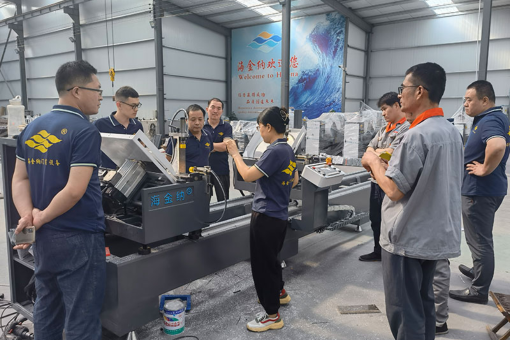
Hisena Production Staff Trains to Improve Installation Steps and Skills for Higher Quality Products

30

Apr

Hisena Production Staff Trains to Improve Installation Steps and Skills for Higher Quality Products

View More
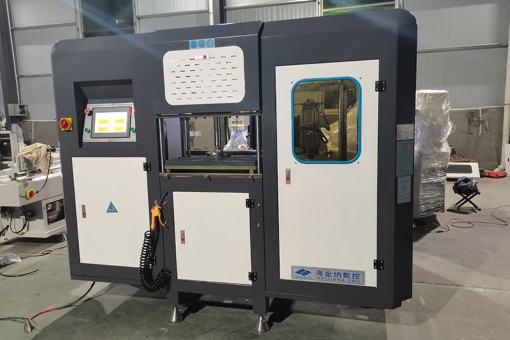
Hisena launched

30

Apr

Hisena launched "CNC 3-axis end milling upgraded version"

View More

Get a Free Quote

Our representative will contact you soon.
Name
Email
Telephone
Country
Company Name
Message
0/1000

aluminium extrusion cutting machine

Advanced Servo-Driven Precision Control System

Advanced Servo-Driven Precision Control System

The heart of any superior aluminium extrusion cutting machine lies in its advanced servo-driven precision control system, which fundamentally transforms how aluminium profiles are processed in modern manufacturing environments. This sophisticated technology employs high-resolution servo motors that regulate every aspect of the cutting operation with microscopic accuracy, positioning the cutting blade and material feed mechanism with precision measured in hundredths of millimeters. Unlike older hydraulic or pneumatic systems that suffer from pressure variations and temperature-related inconsistencies, servo-driven systems maintain unwavering accuracy regardless of ambient conditions or continuous operation duration. The control system interfaces with a programmable logic controller that stores cutting programs for different job specifications, allowing operators to recall previously used settings instantly without manual recalibration, saving valuable setup time when switching between production runs. Real-time monitoring capabilities provide immediate feedback about cutting speed, blade position, material feed rate, and system performance, enabling operators to identify and address potential issues before they affect product quality. The servo system automatically compensates for blade wear throughout the production day, adjusting cutting parameters dynamically to maintain consistent results from the first cut to the thousandth without operator intervention. This intelligent adaptation extends blade life by preventing excessive force application and ensures dimensional consistency across entire production batches. The precision offered by servo-driven control becomes particularly critical when producing components for assemblies where multiple pieces must fit together with tight tolerances, such as curtain wall systems or precision-engineered aluminium frameworks. Manufacturers experience dramatically reduced rejection rates because the system eliminates human error from the cutting equation, with dimensional accuracy remaining constant regardless of operator experience level. The responsive nature of servo motors enables rapid acceleration and deceleration, reducing cycle times while maintaining smooth operation that prevents material distortion or blade deflection during the cutting process. Energy efficiency represents an additional benefit of servo technology, as these systems consume power proportional to the actual work being performed rather than running continuously at full capacity like traditional systems. The digital nature of servo control facilitates integration with factory automation systems and enables data collection for production monitoring, quality assurance documentation, and predictive maintenance scheduling. This connectivity supports modern manufacturing initiatives focused on Industry 4.0 principles and smart factory operations. Operators appreciate the intuitive interfaces that accompany servo-controlled aluminium extrusion cutting machines, with touchscreen displays presenting information clearly and allowing parameter adjustments through simple menu navigation rather than complex mechanical adjustments requiring specialized knowledge or tools.
Automated Material Handling and Positioning Technology

Automated Material Handling and Positioning Technology

Automated material handling and positioning technology integrated into advanced aluminium extrusion cutting machines revolutionizes production workflows by eliminating manual material manipulation and dramatically improving both safety and throughput. This comprehensive system begins with powered infeed conveyors that accept aluminium extrusions of various lengths and transport them smoothly toward the cutting station, removing the need for operators to manually lift and position heavy profiles that can weigh considerable amounts depending on their size and alloy composition. Pneumatic or servo-driven clamping mechanisms secure the material firmly during the cutting operation, preventing vibration or movement that could compromise cutting accuracy or create dangerous situations where material might shift unexpectedly. Sophisticated positioning sensors detect the exact location of the material and communicate with the control system to ensure the cutting blade intersects the profile at precisely the programmed location, accounting for any slight variations in how the extrusion enters the machine. Automated length measuring systems utilize laser or encoder technology to track material position with exceptional precision, eliminating cumulative measurement errors that plague manual measuring methods where small inaccuracies compound across multiple cuts. The system can execute complex cutting patterns automatically, including producing pieces of varying lengths from a single extrusion by referencing a programmed cutting list that optimizes material utilization and minimizes waste. After each cut completes, automated outfeed systems gently transport the finished piece away from the cutting zone and organize it according to length or production sequence, facilitating efficient downstream processing or packaging operations. This continuous flow operation transforms production from a series of discrete manual steps into a smooth, rhythmic process that maximizes equipment utilization and operator productivity. Safety benefits prove equally compelling, as automated handling keeps workers away from moving blades and eliminates repetitive lifting motions that contribute to workplace injuries and long-term ergonomic problems. Operators transition from physically demanding material handlers to machine supervisors who monitor system performance and ensure quality standards are maintained, a shift that reduces fatigue and allows workers to remain alert and focused throughout their shifts. The consistency of automated positioning eliminates variables introduced by different operators or fatigue-related lapses in concentration, ensuring the first piece cut on Monday morning matches the last piece produced on Friday afternoon. Production capacity increases substantially because the machine operates continuously without the pauses required for manual material handling, loading, and positioning. Manufacturers report throughput improvements of thirty to fifty percent compared to manual or semi-automated systems, translating directly into the ability to accept larger orders or reduce lead times for customers. The automated systems also enable lights-out manufacturing scenarios where aluminium extrusion cutting machines can operate during unmanned shifts, dramatically expanding effective production hours without proportional increases in labor costs. Maintenance requirements remain manageable with automated systems designed for industrial durability and incorporating readily accessible components that facilitate routine service and adjustment procedures.
Multi-Profile Versatility with Quick-Change Tooling

Multi-Profile Versatility with Quick-Change Tooling

The exceptional multi-profile versatility offered by modern aluminium extrusion cutting machines, enhanced by quick-change tooling systems, provides manufacturers with unprecedented flexibility to process diverse product ranges without maintaining multiple specialized machines or enduring lengthy changeover procedures. This adaptability proves essential in today's manufacturing environment where customer demands shift rapidly and product lifecycles shorten continuously, requiring production facilities to handle varied specifications efficiently. Advanced aluminium extrusion cutting machines accommodate profiles ranging from small decorative trim pieces measuring just a few millimeters across to substantial structural extrusions exceeding several hundred millimeters in width and height, all on the same equipment platform. The machines feature adjustable clamping systems that reconfigure quickly to secure different profile geometries, whether round tubes, rectangular hollow sections, complex multi-cavity designs, or irregular custom shapes created for specific applications. Quick-change blade mounting systems allow operators to swap cutting blades in minutes rather than hours, facilitating transitions between materials of different hardness or thickness that require specific blade configurations for optimal results. This rapid changeover capability eliminates the production bottlenecks that occur when a single machine must process multiple product types throughout the day, keeping manufacturing schedules flowing smoothly and preventing costly delays that frustrate customers and erode competitive positioning. The economic implications of multi-profile versatility extend beyond operational flexibility to encompass significant capital expenditure advantages, as manufacturers can consolidate cutting operations onto fewer machines rather than purchasing dedicated equipment for each product category. This consolidation reduces facility space requirements, simplifies maintenance inventory management, and decreases the training burden on operators who need to master only one system rather than multiple different machines. The quick-change tooling philosophy extends to material support systems and cutting blade guards, which adjust easily to accommodate different profile sizes without requiring mechanical expertise or specialized tools. Manufacturers serving diverse markets particularly benefit from this versatility, such as fabrication shops that produce both architectural components and industrial assemblies, or companies that maintain product lines spanning different industries with varying specifications. The ability to switch rapidly between jobs enables economical production of smaller batch sizes, making custom orders financially viable and opening revenue opportunities that would be unprofitable with less flexible equipment requiring extensive setup times. Quality remains consistent across different profiles because the fundamental precision systems remain unchanged regardless of which specific product is being processed, ensuring customers receive the same excellent results whether ordering standard catalog items or unique custom specifications. This consistency builds customer confidence and supports long-term business relationships based on reliable delivery of quality products. The versatility also future-proofs manufacturing investments by ensuring the aluminium extrusion cutting machine can adapt to new product introductions and market evolution without requiring replacement or major modifications. As architectural trends shift, automotive designs evolve, or new applications for aluminium extrusions emerge, manufacturers equipped with versatile cutting systems can respond immediately to capitalize on opportunities while competitors struggle with equipment limitations or face expensive upgrade requirements that impact profitability and competitive responsiveness in dynamic market conditions.
Get a Free Quote

Our representative will contact you soon.
Name
Email
Telephone
Country
Company Name
Message
0/1000