
 EN
EN


The modern glass fabrication industry faces constant pressure to increase output without sacrificing quality. Manufacturers seeking to scale operations must invest in sophisticated equipment that transforms how a window production line performs. An insulating glass production line represents one of the most effective solutions for companies looking to double or triple throughput while maintaining precision standards that today's market demands.
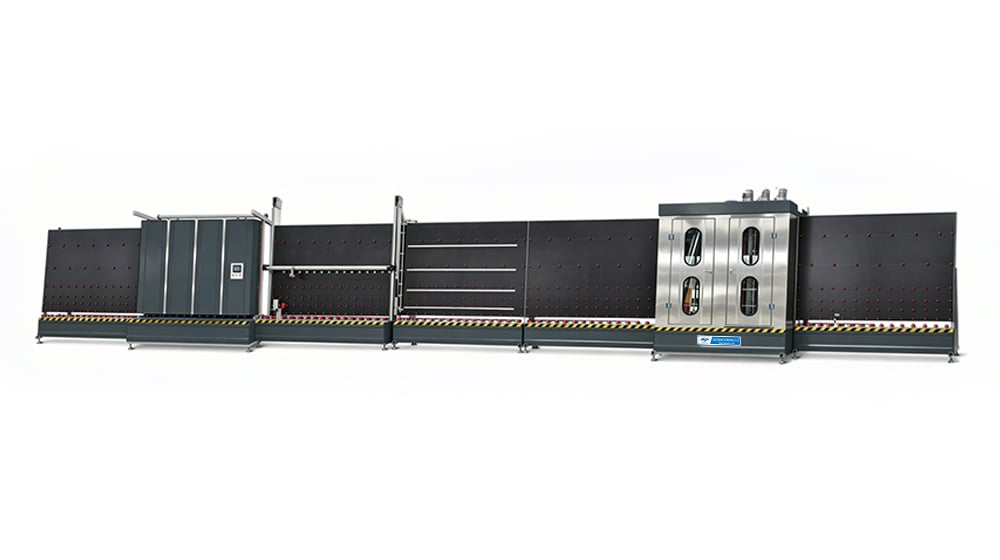
A window production line that integrates insulating glass capabilities enables fabricators to process complex glazing units at industrial scale. This technology directly addresses the bottlenecks that limit traditional production methods, allowing manufacturers to meet growing demand from construction, renovation, and retrofit markets across commercial and residential sectors.
Understanding Insulating Glass Production Line Capacity
Core Components of High-Performance Window Production Line Systems
A modern window production line designed around insulating glass fabrication includes multiple integrated stages that work in precise coordination. The automatic glass cutting system handles incoming raw stock with minimal manual handling, while the edge processing unit prepares surfaces to exact specifications. The spacer frame assembly station creates the foundation for the insulating unit, positioning precision aluminum or foam spacers between glass panes. The window production line then moves to the sealant application phase, where primary and secondary seals are applied with robotic precision to ensure airtight performance. Environmental controls throughout the window production line maintain temperature and humidity stability, critical factors that determine the longevity and performance of finished insulating units.
The final pressing stage consolidates all components into a unified, structurally sound insulating glass unit. Quality inspection systems embedded within your window production line continuously monitor dimensional accuracy, seal integrity, and overall build quality. Modern window production line configurations achieve throughput rates measured in hundreds of units per shift, compared to dozens per shift in manual or semi-automated environments.
Automation's Role in Expanding Window Production Line Performance
Automation directly multiplies the capacity of any window production line by reducing cycle times and eliminating variability between units. Robotic glazing systems on a modern window production line handle complex geometries and large formats that would be dangerous or impractical for human operators. The window production line's automated sorting and staging systems ensure continuous material flow, preventing bottlenecks that interrupt production rhythm. Programmable logic controllers governing each window production line function adapt quickly to product specification changes, allowing rapid transitions between different unit sizes and configurations without extended downtime.
Strategic Advantages of Scaling with Integrated Insulating Glass Equipment
Cost Efficiency and Return on Investment
Investing in an advanced window production line generates measurable financial returns through multiple channels. Labor productivity increases substantially because skilled technicians supervise and manage the window production line rather than performing repetitive assembly tasks. Scrap rates drop dramatically when your window production line operates with robotic consistency, reducing material waste that directly impacts profitability. The window production line's ability to maintain tight dimensional tolerances means fewer field callbacks and warranty claims, protecting revenue and brand reputation. Energy consumption per unit also improves as an integrated window production line optimizes heating, cooling, and processing sequences based on production volume.
Speed-to-market advantages emerge quickly when your window production line reduces manufacturing lead times. Customers requesting custom insulating glass units receive their orders faster, enabling contractors and builders to maintain project schedules. This responsiveness creates competitive advantage in markets where delivery speed influences contract awards.
Quality Consistency and Performance Outcomes
An insulating glass production line built on modern automation ensures every unit meets or exceeds performance specifications consistently. The window production line's sensor arrays detect deviations in real time, triggering corrections before defects propagate through subsequent units. Thermal performance of insulating units produced on a disciplined window production line remains stable across production runs, batch seasons, and years of operation. The window production line's documentation and traceability systems provide complete genealogy for each unit, supporting compliance with building codes and product warranties.
Moisture management represents a critical success factor for any window production line producing insulating units. Advanced desiccant handling and controlled atmosphere processes embedded in your window production line prevent the premature seal failure and fogging that compromise performance. Long-term customer satisfaction grows when your window production line consistently delivers units that perform as specified across decades of service life.
Implementation Pathway and Operational Excellence
Phased Scaling Strategies for Window Production Line Integration
Successful scaling of a window production line typically follows a staged approach rather than attempting massive overnight expansion. The initial window production line installation focuses on core functions: glass preparation, spacer assembly, and primary sealing operations. Once your team masters routine operation and maintenance of the window production line, capacity and functionality expand through modular equipment additions. A window production line can grow incrementally, adding pressing capacity, multi-chamber sealing modules, or advanced coating application as market demand justifies investment.
Staff training forms the foundation of any window production line expansion strategy. Operators become proficient with window production line controls, learning to identify early warning signs of equipment drift or performance degradation. Technicians develop expertise maintaining the window production line's mechanical and pneumatic systems, reducing unexpected downtime. This human-machine partnership ensures your window production line operates at peak efficiency and adapts flexibly to changing product specifications and market conditions.
Maintenance and Optimization of Long-Term Window Production Line Success
Preventive maintenance schedules keep your window production line operating reliably at scaled production volumes. Systematic inspection of sealing mechanisms, pressing surfaces, and positioning systems prevents costly failures that disrupt production. The window production line's performance data, continuously captured through integrated monitoring systems, reveals optimization opportunities that incrementally improve throughput or reduce energy consumption. Regular calibration of the window production line's dimensional measuring systems maintains accuracy across thousands of production cycles.
Continuous improvement initiatives driven by production data and operator feedback elevate the window production line's baseline performance. Equipment suppliers providing technical support help fabricators extract maximum value from their window production line investment through software updates, process refinements, and performance benchmarking against industry standards.
FAQ
How does an insulating glass production line increase output compared to traditional manufacturing?
A modern window production line built for insulating glass fabrication typically increases output by three to five times compared to manual assembly methods. Automation eliminates waiting time between production stages, reduces cycle times per unit, and operates continuously without the breaks that human workers require. A window production line operating at full capacity processes complex glazing units in minutes rather than hours, enabling manufacturers to capture larger market share and serve customers demanding rapid delivery.
What technical expertise is required to operate and maintain a window production line?
Operating a window production line requires trained technicians with mechanical knowledge, electrical troubleshooting skills, and understanding of glass and sealant chemistry. Most equipment manufacturers provide comprehensive training programs covering window production line operation, routine maintenance, and emergency procedures. Your window production line will require both full-time operators managing daily production and specialized maintenance technicians performing preventive service and repairs. Many manufacturers find that building a dedicated window production line team reduces downtime and maximizes the equipment's productive capacity.
What investment level is typical for scaling operations with a window production line?
Investment in a comprehensive window production line ranges from several hundred thousand to several million dollars depending on desired capacity, automation level, and optional features. A window production line capable of producing several hundred units daily represents a significant capital commitment, but financial modeling typically shows payback periods of three to five years through increased production and reduced per-unit manufacturing costs. Many manufacturers phase window production line investments, starting with core equipment and expanding as market demand justifies additional capacity.